History · Ancient Greece
Classical Greece
The Classical Period of ancient Greece, spanning from 480 BCE to 323 BCE, represents the pinnacle of Greek civilization and one of the most influential eras in human history. This remarkable period witnessed the flowering of democ…
The Classical Period of ancient Greece, spanning from 480 BCE to 323 BCE, represents the pinnacle of Greek civilization and one of the most influential eras in human history. This remarkable period witnessed the flowering of democracy in Athens, the creation of enduring works of philosophy, drama, and art, the construction of architectural masterpieces like the Parthenon, and the emergence of scientific and rational thought that would fundamentally shape Western civilization. The Classical Period transformed the innovations of the Archaic era into mature achievements that continue to influence political thought, artistic expression, and intellectual inquiry to this day.
Introduction
This golden age began with the successful Greek resistance to Persian invasion during the Persian Wars (499-449 BCE) and concluded with the death of Alexander the Great in 323 BCE, whose conquests had spread Greek culture throughout the known world. Between these bookends, Greek civilization achieved unprecedented heights in virtually every field of human endeavour, from political organization and military strategy to philosophy and artistic expression. The confidence gained from defeating the mighty Persian Empire, combined with the economic prosperity that followed, created conditions that enabled extraordinary cultural and intellectual achievements.
The Classical Period was characterized by the dominance of Athens as a cultural and political centre, though other city-states like Sparta, Thebes, and Syracuse also played crucial roles in shaping the era's developments. The contrast between Athenian democracy and Spartan oligarchy provided competing models of political organization, while the ongoing rivalry between these two powers ultimately led to the devastating Peloponnesian War that marked the beginning of the end of the classical polis system. Despite these conflicts, or perhaps because of them, the period produced an extraordinary flowering of human creativity and achievement that established enduring standards for civilization itself.
The geographical scope of Classical Greek influence extended far beyond the traditional boundaries of Greece to include colonies throughout the Mediterranean, tributary states in the Athenian empire, and ultimately the vast territories conquered by Alexander the Great. This expansion created networks of cultural exchange that enriched Greek civilization while spreading Greek ideas, institutions, and artistic forms throughout the ancient world. The synthesis of Greek culture with local traditions in these diverse regions created the foundations for the Hellenistic civilization that would succeed the Classical period and continue Greek influence for centuries.
The Persian Wars and Greek Unity
The Persian Wars (499-449 BCE) marked the beginning of the Classical Period and provided the confidence, unity, and prosperity that enabled subsequent Greek achievements. The successful defence against the Persian Empire, the largest and most powerful state in the ancient world, demonstrated Greek military capability and political resolve while creating a sense of cultural superiority that would characterize Classical Greek attitudes toward non-Greek peoples.
The Ionian Revolt (499-494 BCE) began the conflict when Greek cities in Asia Minor rebelled against Persian rule with support from Athens and Eretria. Although the revolt was ultimately crushed, it provoked Persian retaliation against mainland Greece that would test Greek independence and unity. The Persian response revealed both the military power of the Persian Empire and the determination of the Greeks to maintain their freedom and cultural autonomy.
The Battle of Marathon (490 BCE) demonstrated Athenian military prowess and tactical innovation when a significantly outnumbered Greek force defeated the Persian army through superior strategy and fighting technique. The Athenian victory at Marathon proved that Persian forces could be defeated and provided crucial confidence for subsequent resistance efforts. The heroic reputation gained by the Athenian hoplites at Marathon established Athens as a leading defender of Greek freedom while providing inspiration for later military efforts.
Xerxes' massive invasion of Greece in 480 BCE represented the climax of Persian efforts to conquer the Greek mainland and posed an existential threat to Greek independence and cultural survival. The Persian force, numbering in the hundreds of thousands according to ancient sources, required unprecedented Greek cooperation and military innovation to resist successfully. The invasion created circumstances that temporarily united traditionally competitive Greek cities in a common cause while testing the effectiveness of Greek military institutions and cultural values.
The Battle of Thermopylae (480 BCE), though a tactical defeat for the Greeks, became a powerful symbol of Greek heroism and determination to resist foreign domination at any cost. The sacrifice of Leonidas and his 300 Spartans, along with their Greek allies, demonstrated the Greek commitment to freedom while buying crucial time for defensive preparations. The heroic stand at Thermopylae inspired subsequent resistance efforts while establishing enduring ideals of courage and sacrifice that would influence Greek cultural values for centuries.
The naval victory at Salamis (480 BCE) proved decisive in the Persian Wars by destroying Persian naval superiority and forcing Xerxes to withdraw the majority of his forces from Greece. The Athenian-led Greek fleet's victory demonstrated the importance of naval power while validating Themistocles' strategic vision of maritime defense. The victory at Salamis established Athens as the leading naval power in Greece while providing the foundation for subsequent Athenian empire and commercial dominance.
The final Greek victories at Plataea and Mycale (479 BCE) completed the expulsion of Persian forces from Greek territory while establishing Greek military superiority that would enable subsequent offensive operations. These victories validated the effectiveness of hoplite warfare and Greek military organization while demonstrating that coordinated Greek efforts could defeat even the largest foreign armies. The success of the Persian Wars created confidence and unity that would support Greek expansion and cultural achievement throughout the Classical Period.
The Rise of Athenian Democracy
The development of Athenian democracy during the early Classical Period represented one of the most significant political innovations in human history, creating institutions and practices that enabled unprecedented citizen participation in government while establishing principles of political equality and accountability that continue to influence democratic theory and practice today.
The reforms of Cleisthenes in the late Archaic Period had established the basic framework for democratic government, but the full development of Athenian democracy occurred during the Classical Period as confidence gained from the Persian Wars encouraged further democratization. The expansion of citizen rights and responsibilities reflected growing belief in the political capabilities of ordinary citizens while demonstrating the practical effectiveness of popular government in meeting external and internal challenges.
The ostracism system, introduced by Cleisthenes and refined during the Classical Period, provided a mechanism for removing potentially dangerous political leaders without the violence that had characterized earlier political conflicts. This institution allowed the Athenian people to exile prominent citizens who were seen as threats to democratic government while avoiding the bloodshed that typically accompanied political struggles in other Greek cities. The use of ostracism demonstrated Athenian commitment to peaceful resolution of political conflicts while protecting democratic institutions from aristocratic or tyrannical threats.
Pericles emerged as the leading democratic statesman during the height of Classical Athens, serving as strategos for fifteen consecutive years and guiding Athenian policy during the city's greatest period of prosperity and cultural achievement. His leadership demonstrated that democratic government could produce effective and visionary leadership while maintaining popular accountability and constitutional restraints. Pericles' funeral oration, as recorded by Thucydides, provided the most eloquent expression of democratic values and Athenian cultural achievement while articulating ideals of citizenship and political participation that continue to inspire democratic movements.
The expansion of citizen participation during the Classical Period included the introduction of pay for public service, which enabled poorer citizens to participate in government without sacrificing their economic survival. This innovation, associated with Pericles and earlier democratic leaders, democratized political participation by removing economic barriers while ensuring that government service was available to citizens regardless of their wealth. The payment system demonstrated Athenian commitment to genuine political equality while creating practical mechanisms for broad-based democratic participation.
The Athenian assembly (ekklesia) became the central institution of democratic government, meeting regularly to debate and decide all major policy questions while providing opportunities for any citizen to speak and propose legislation. The assembly's procedures balanced free debate with efficient decision-making while ensuring that all citizens had opportunities to influence government policy. The democratic character of assembly debates, where speakers were judged on the merit of their arguments rather than their social status, represented a revolutionary departure from traditional aristocratic politics.
The Athenian legal system developed sophisticated procedures for ensuring fair trials and equal justice while maintaining democratic control over legal proceedings through citizen juries and elected magistrates. The use of large citizen juries, typically numbering in the hundreds, prevented corruption while ensuring that legal decisions reflected community values and standards. The development of legal procedures that protected individual rights while maintaining collective authority demonstrated the compatibility of democracy with the rule of law.
The limitations of Athenian democracy, particularly the exclusion of women, slaves, and foreign residents from political participation, reflected the social assumptions of the Classical Period while demonstrating that even the most advanced political institutions of the era maintained significant restrictions on political equality. Despite these limitations, Athenian democracy represented unprecedented expansion of political participation while establishing principles and institutions that would influence subsequent democratic development throughout the Western world.
The Athenian Empire and Delian League
The transformation of the Delian League from a voluntary alliance against Persia into an Athenian empire represented one of the most significant political developments of the Classical Period, demonstrating both the possibilities and dangers of interstate cooperation while providing the economic foundations for Athenian cultural achievement and the political tensions that would lead to the Peloponnesian War.
The foundation of the Delian League in 478 BCE created an alliance system designed to continue the war against Persia while protecting Greek cities from future Persian attacks. The league's initial structure reflected Greek principles of autonomy and equality, with member cities contributing either ships or tribute to a common fund administered from the sacred island of Delos. This arrangement provided effective military cooperation while respecting traditional Greek political independence and cultural values.
The gradual transformation of the league into an Athenian empire occurred through a series of actions that increased Athenian control while reducing member autonomy, including the transfer of the league treasury from Delos to Athens, the requirement that all members contribute tribute rather than ships, and the use of Athenian military force to prevent member cities from withdrawing. These changes reflected the practical challenges of maintaining an effective alliance while revealing Athenian ambitions for increased power and influence.
The economic benefits of empire provided Athens with unprecedented wealth that supported the cultural achievements of the Classical Period while enabling the construction of magnificent public buildings and the support of artists, philosophers, and other cultural figures. The tribute collected from league members, combined with the commercial advantages of empire, created prosperity that enabled Athens to become the cultural centre of the Greek world. This imperial wealth demonstrated the material benefits of political dominance while creating resources that supported lasting cultural achievements.
The Athenian use of imperial resources for domestic projects, particularly the construction of the Parthenon and other buildings on the Acropolis, represented a controversial application of league funds that demonstrated Athenian priorities while creating architectural masterpieces that celebrated Athenian achievement. The decision to use tribute money for domestic rather than military purposes reflected Athenian confidence in their position while providing tangible benefits that justified imperial rule to Athenian citizens.
The development of imperial administration required new institutions and practices that balanced efficient control with the need to maintain at least nominal respect for member autonomy. Athens established cleruchy settlements, imposed democratic governments on allied cities, and created legal procedures for resolving disputes within the empire. These administrative innovations demonstrated Athenian governmental sophistication while creating precedents for imperial administration that would influence subsequent empire-building efforts.
The resistance to Athenian empire by member cities and other Greek states reflected traditional Greek values of independence and autonomy while demonstrating the tensions created by imperial rule. Revolts by cities like Naxos, Samos, and Mytilene required military suppression that revealed the coercive nature of Athenian control while creating resentments that would eventually contribute to the outbreak of the Peloponnesian War. The ongoing resistance to imperial rule demonstrated that Greek political culture remained fundamentally opposed to permanent foreign domination.
The international consequences of Athenian imperialism included the formation of opposing alliances led by Sparta and growing tensions that would ultimately lead to the destructive Peloponnesian War. The expansion of Athenian power threatened traditional Greek principles of city-state independence while creating strategic imbalances that made conflict increasingly likely. The imperial experiment thus demonstrated both the possibilities and limitations of Greek interstate cooperation while providing essential background for understanding the subsequent decline of Classical Greek civilization.
Sparta and the Peloponnesian League
Sparta's unique political and social system provided an alternative model to Athenian democracy while establishing military capabilities and alliance relationships that enabled successful resistance to Athenian expansion. The contrast between Spartan oligarchy and Athenian democracy created competing visions of Greek political organization while demonstrating different approaches to balancing individual freedom with collective security and military effectiveness.
The Spartan constitution, attributed to the legendary lawgiver Lycurgus, created a mixed government that balanced monarchical, aristocratic, and democratic elements while subordinating individual interests to collective military effectiveness. The dual kingship provided military leadership and religious authority, while the gerousia (council of elders) offered aristocratic wisdom and the apella (citizen assembly) enabled popular participation in major decisions. This constitutional arrangement achieved remarkable stability while creating military capabilities that enabled Spartan dominance in the Peloponnese.
The agoge system of education and training created Spartan citizens who were primarily soldiers, dedicating their lives to military service and collective defence while maintaining social solidarity and military effectiveness that enabled Sparta to control a much larger population of helots and perioeci. The rigorous physical and military training that characterized Spartan education produced warriors of exceptional skill and dedication while creating cultural values that emphasized duty, courage, and self-sacrifice above individual achievement or material success.
The helot system provided Sparta with agricultural labour that freed citizens for military training while creating ongoing security challenges that influenced Spartan domestic and foreign policy throughout the Classical Period. The helots, essentially state serfs bound to the land, produced the food that enabled Spartan military specialization while their potential for revolt required constant vigilance and occasional brutal suppression. This labour system enabled Spartan military excellence while creating social tensions that limited Spartan flexibility and expansion.
The Peloponnesian League, established under Spartan leadership during the Archaic Period, provided a framework for interstate cooperation that respected member autonomy while creating effective military capabilities for collective defense. The league's structure allowed member cities to maintain their internal political arrangements while contributing military forces for common objectives under Spartan leadership. This alliance system demonstrated alternative approaches to interstate cooperation that contrasted sharply with Athenian imperial methods.
Spartan military excellence, based on professional training, superior equipment, and unmatched discipline, established Sparta as the premier land power in Greece while creating military capabilities that could challenge Athenian expansion and imperial ambitions. The Spartan phalanx was widely regarded as the most effective military formation in Greece, while Spartan military leadership and tactical expertise provided crucial advantages in major conflicts. This military superiority enabled Sparta to lead resistance to Athenian imperialism while maintaining independence and cultural autonomy.
The cultural values of Sparta, emphasizing collective duty, military excellence, and traditional customs, provided an alternative to Athenian emphasis on individual achievement, intellectual innovation, and commercial success. Spartan culture valued stability, tradition, and military virtue above artistic creativity or intellectual speculation while maintaining social institutions that had enabled remarkable military and political success for centuries. These cultural differences reflected different priorities and values that would influence the character of the conflict between Athens and Sparta.
Spartan foreign policy during the Classical Period balanced the desire to maintain traditional leadership in the Peloponnese with the need to respond to Athenian expansion and imperial ambitions. Sparta's reluctant involvement in broader Greek affairs reflected both confidence in their local dominance and recognition that Athenian power threatened traditional Greek political arrangements. The eventual Spartan decision to challenge Athenian empire directly led to the Peloponnesian War that would transform the entire Greek political landscape.
The Peloponnesian War
The Peloponnesian War (431-404 BCE) represented the defining conflict of the Classical Period, as the rivalry between Athens and Sparta escalated into a devastating struggle that involved most of the Greek world while demonstrating both the strengths and weaknesses of Classical Greek civilization. This prolonged conflict transformed Greek political relationships while exhausting the resources and undermining the institutions that had enabled Classical achievements.
The underlying causes of the Peloponnesian War included Athenian imperial expansion, Spartan fears of encirclement, economic competition, and fundamental disagreements about interstate relationships that made conflict increasingly difficult to avoid. Thucydides identified the growth of Athenian power and Spartan fear as the fundamental cause, while immediate disputes over Corcyra, Potidaea, and Megara provided pretexts for war. The structural tensions between imperial and alliance systems created conditions where minor disputes could escalate into major conflicts.
The first phase of the war (431-421 BCE), known as the Archidamian War after the Spartan king who led initial invasions of Attica, established the basic strategic pattern of Spartan land superiority and Athenian naval dominance. Pericles' strategy of avoiding land battles while using naval power to attack Spartan allies demonstrated Athenian strategic thinking while creating conditions for a prolonged conflict. The devastating plague that struck Athens in 430-429 BCE, killing Pericles and a large portion of the population, revealed the vulnerability of concentrated urban populations while undermining Athenian strategic capabilities.
The Peace of Nicias (421 BCE) provided a temporary respite from conflict while failing to resolve the underlying tensions that had caused the war. The peace agreement restored territories and prisoners while establishing mechanisms for resolving future disputes, but it failed to address fundamental disagreements about imperial relationships and interstate arrangements. The fragile nature of the peace reflected the deep-seated character of Athenian-Spartan rivalry while providing only temporary relief from the destructive effects of warfare.
The Sicilian Expedition (415-413 BCE) represented Athens' most ambitious attempt to expand their empire while demonstrating the dangers of overextension and strategic miscalculation. The decision to attack Syracuse reflected Athenian confidence in their military capabilities while revealing poor strategic planning and inadequate understanding of local conditions. The complete destruction of the Athenian expeditionary force represented the turning point of the war while demonstrating the limits of Athenian power and the consequences of imperial overreach.
The final phase of the war (413-404 BCE) witnessed the gradual erosion of Athenian power as Persian financial support enabled Sparta to challenge Athenian naval supremacy while Athenian allies began defecting to the Spartan side. The construction of a Spartan fleet with Persian gold fundamentally changed the strategic balance while demonstrating the importance of external intervention in Greek conflicts. The series of naval battles that concluded the war showed that Athenian naval expertise could not overcome superior resources and strategic positioning.
The siege of Athens and final surrender in 404 BCE marked the end of Athenian imperial power while establishing Spartan hegemony throughout the Greek world. The harsh peace terms, including the destruction of the long walls and the restriction of the Athenian fleet, reflected Spartan determination to prevent Athenian recovery while demonstrating the complete character of their victory. The fall of Athens represented the end of the greatest democratic experiment of the Classical Period while establishing new patterns of interstate relationships.
The consequences of the Peloponnesian War included enormous loss of life, economic devastation, political instability, and the undermining of traditional Greek institutions and values that had characterized the Classical Period. The war's destructive effects created conditions that would enable Macedonian conquest while demonstrating the inability of the polis system to achieve lasting peace and cooperation. The detailed account of the war by Thucydides provided not only historical record but also enduring insights into the nature of power, politics, and human behaviour that continue to influence political analysis and international relations theory.
Philosophy and the Intellectual Revolution
The Classical Period witnessed an unprecedented flowering of philosophical thought that fundamentally transformed human understanding of knowledge, ethics, politics, and reality itself. The emergence of systematic rational inquiry, represented by figures like Socrates, Plato, and Aristotle, established intellectual traditions that continue to influence Western thought while demonstrating the capacity of human reason to address fundamental questions about existence, knowledge, and moral behaviour.
The Pre-Socratic philosophers of the late Archaic and early Classical periods had established rational inquiry as an alternative to mythological explanations of natural phenomena, but the Classical period saw the development of more systematic approaches to philosophical questions while expanding philosophical investigation to include ethical and political concerns. Philosophers like Anaxagoras, Empedocles, and Democritus developed sophisticated theories about the nature of matter and change while establishing methodological approaches that influenced subsequent philosophical development.
Socrates (470-399 BCE) revolutionized philosophy by turning philosophical attention from natural philosophy to ethical questions while developing dialectical methods of inquiry that emphasized critical examination of beliefs and assumptions. His famous assertion that "the unexamined life is not worth living" established self-knowledge and moral reflection as central philosophical concerns while his method of questioning revealed the uncertainty and contradictions in commonly held beliefs. Socrates' commitment to rational inquiry, even at the cost of his life, demonstrated the importance of intellectual integrity while establishing martyrdom for philosophical principles as a heroic ideal.
The Socratic method of inquiry through questioning and dialogue created new approaches to philosophical investigation that emphasized cooperative investigation of truth rather than dogmatic assertion of conclusions. This methodology recognized that genuine knowledge required rigorous examination of assumptions while acknowledging the limitations of human understanding and the importance of intellectual humility. The dialogical character of Socratic philosophy reflected democratic values of open discussion while establishing collaborative approaches to intellectual inquiry that would influence educational theory and practice.
Plato (428-348 BCE) developed the most systematic philosophical system of the Classical period, creating comprehensive theories of knowledge, reality, ethics, and politics that addressed fundamental philosophical questions while establishing the Academy as an institution for advanced philosophical education. His theory of Forms provided explanations for the nature of knowledge and reality while his political philosophy offered detailed analysis of justice and governmental systems. Plato's literary skill in creating philosophical dialogues demonstrated that complex philosophical ideas could be presented in engaging and accessible forms.
The Theory of Forms represented Plato's solution to fundamental problems about the nature of knowledge and reality by positing eternal, unchanging essences that provided standards for understanding the changing world of sensory experience. This theory explained how certain knowledge was possible while accounting for the apparent contradiction between the permanence required for knowledge and the constant change observed in the physical world. The Forms provided metaphysical foundations for ethics and politics while establishing idealist philosophical traditions that would influence subsequent philosophical development for centuries.
Plato's Republic offered the most comprehensive analysis of justice and political organization in ancient philosophy while providing detailed examination of the relationship between individual character and social institutions. The work's analysis of different governmental systems, from democracy to tyranny, demonstrated sophisticated understanding of political dynamics while its vision of philosopher-kings ruling according to rational principles established ideals of enlightened governance. The Republic's integration of ethical and political philosophy showed how individual virtue and social justice were interconnected while providing enduring insights into the nature of political authority and moral obligation.
Aristotle (384-322 BCE) created the most comprehensive philosophical system of the ancient world, developing systematic approaches to logic, natural science, ethics, politics, and aesthetics that established foundations for subsequent philosophical and scientific investigation. His empirical approach to natural philosophy, combined with sophisticated logical analysis, created methodologies that advanced human understanding while his practical philosophy provided detailed analysis of ethical and political questions that continue to influence moral and political theory.
Drama and Theatre
The development of drama during the Classical Period represented one of the most distinctive and influential cultural achievements of Greek civilization, creating art forms that combined poetry, music, dance, and spectacle while exploring fundamental questions about human nature, divine justice, and social relationships that continue to resonate in contemporary culture and literature.
Greek drama emerged from religious festivals honouring Dionysus, the god of wine, fertility, and divine ecstasy, but evolved into sophisticated art forms that addressed serious moral, political, and philosophical questions while entertaining diverse audiences from throughout the Greek world. The religious origins of drama provided frameworks for exploring relationships between human and divine while the competitive structure of dramatic festivals encouraged artistic innovation and excellence that produced works of enduring beauty and significance.
The Great Dionysia, the most important dramatic festival in Athens, brought together citizens, foreigners, and allies to witness dramatic competitions while celebrating Athenian cultural achievement and civic unity. The festival's combination of religious observance, artistic competition, and political display demonstrated the integration of culture and politics in Athenian life while providing venues for examining contemporary issues through mythological narratives. The public character of dramatic festivals made theatre a truly democratic art form that addressed shared concerns while entertaining mass audiences.
Aeschylus (525-456 BCE), the earliest of the great tragic poets, established many of the conventions of tragic drama while exploring themes of divine justice, human responsibility, and the relationship between fate and free will that would characterize subsequent tragic literature. His trilogy the Oresteia traced the evolution from primitive vengeance to civilized justice while celebrating the establishment of Athenian legal institutions. Aeschylus' dramatic innovations, including the addition of a second actor and sophisticated choral arrangements, created possibilities for complex dramatic interaction while maintaining the religious and moral seriousness that characterized early tragedy.
Sophocles (496-406 BCE) perfected the art of tragic drama through technical innovations and psychological insight that created characters of extraordinary complexity and emotional depth while exploring fundamental questions about human nature and moral behaviour. His addition of a third actor and reduction of the chorus's role enabled more complex dramatic interactions while his masterful use of irony and dramatic structure created powerful emotional effects. Plays like Oedipus Rex and Antigone demonstrated how mythological stories could illuminate contemporary moral and political issues while achieving artistic excellence that established enduring standards for dramatic literature.
The Sophoclean hero, typically a noble character whose admirable qualities become sources of tragic destruction, explored the paradoxes of human excellence while demonstrating how strength could become weakness under particular circumstances. Characters like Oedipus, Antigone, and Ajax embodied heroic virtues that led to their destruction while revealing the complexity of moral choice and the limitations of human understanding. These tragic figures provided models for understanding human greatness while acknowledging the fragility and uncertainty that characterize human existence.
Euripides (480-406 BCE) challenged traditional dramatic conventions while exploring psychological realism and social criticism that reflected the intellectual ferment of Classical Athens during the Peloponnesian War. His portrayal of characters with recognizably human emotions and motivations, combined with sceptical examination of traditional religious and moral assumptions, created drama that was both innovative and controversial. Plays like Medea and The Trojan Women demonstrated how mythological narratives could address contemporary social issues while challenging audiences to examine their own beliefs and assumptions.
Comedy, as perfected by Aristophanes (448-380 BCE), provided satirical commentary on contemporary political and cultural issues while entertaining audiences with fantastical plots, crude humour, and sharp social observation. The freedom of comic poets to mock political leaders, intellectual trends, and social conventions demonstrated the openness of Athenian democratic culture while providing outlets for criticism and dissent that supported political accountability. Plays like The Clouds, which satirized Socrates and the sophists, and The Birds, which offered escapist fantasy, showed the range and versatility of comic drama while establishing satirical traditions that continue to influence comedy and social criticism.
Art and Architecture
The artistic achievements of the Classical Period established aesthetic principles and technical standards that have influenced artistic development throughout the Western world while creating individual works of such beauty and perfection that they continue to inspire and challenge contemporary artists. Classical Greek art synthesized technical mastery with intellectual sophistication while expressing cultural values and religious beliefs that defined Greek civilization.
Classical sculpture achieved unprecedented naturalism and expressive power through innovations in anatomical understanding, proportional systems, and technical execution that enabled artists to represent both the idealized human form and complex emotional states. The development of contrapposto, the naturalistic positioning of the human body with weight shifted to one leg, created more lifelike and dynamic sculptures while demonstrating sophisticated understanding of human anatomy and movement. Sculptors like Phidias, Polyclitus, and Praxiteles created works that combined technical perfection with spiritual and aesthetic significance.
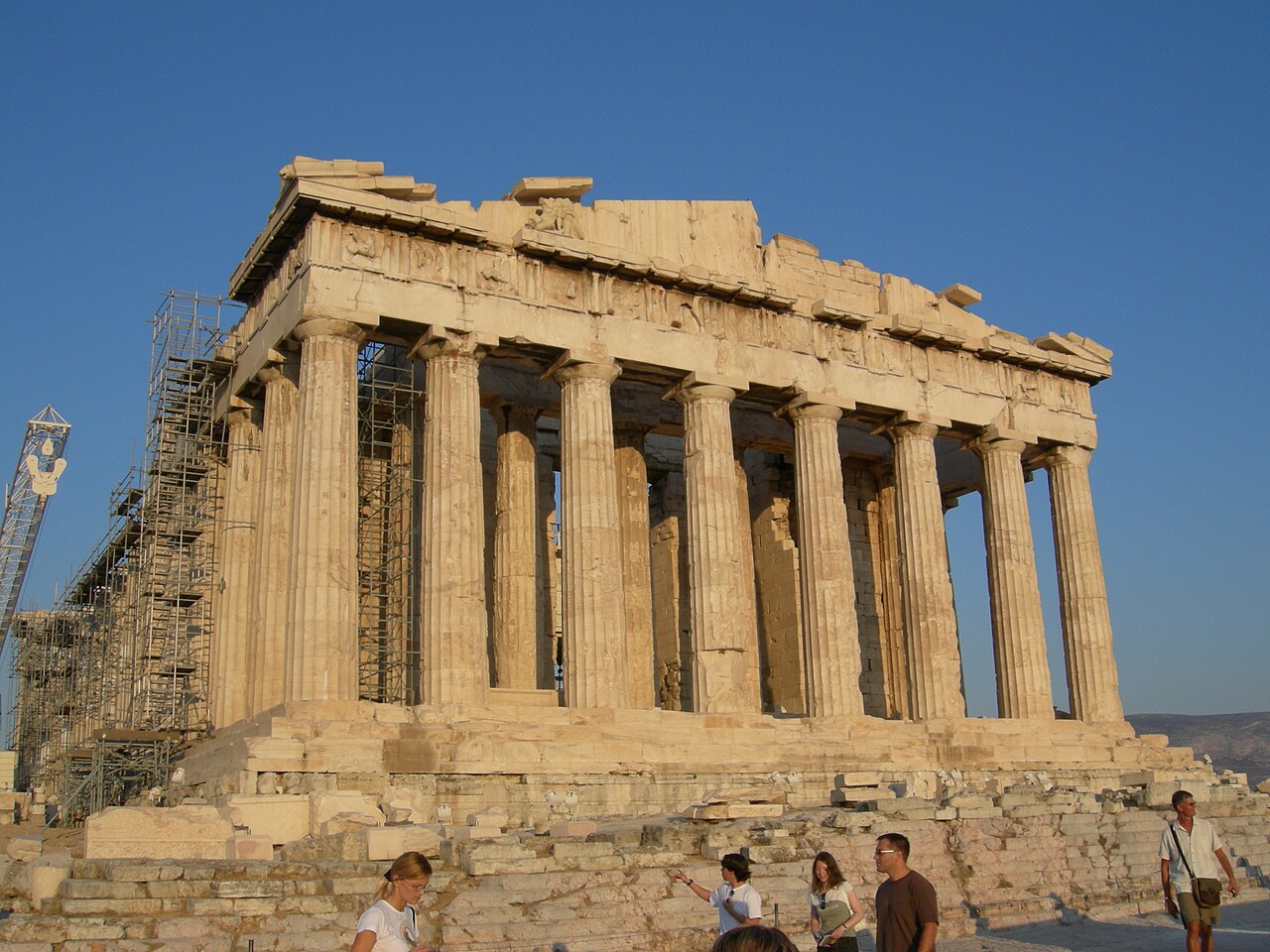
The Parthenon sculptures, created under the direction of Phidias, represented the culmination of Classical sculptural achievement while celebrating Athenian cultural and political superiority through artistic excellence. The pediments, metopes, and frieze of the Parthenon demonstrated mastery of narrative sculpture while creating unified artistic programs that combined mythological themes with contemporary political messages. The technical perfection and aesthetic beauty of these works established standards for monumental sculpture while advertising Athenian cultural achievement to the Greek world.
The development of the Classical orders in architecture - particularly the perfection of the Doric order and the refinement of the Ionic order - provided mathematical systems for creating buildings of extraordinary beauty and structural integrity while establishing architectural traditions that continue to influence building design. The Parthenon exemplified the perfection of Doric architecture through subtle refinements like entasis and optical corrections that created visual perfection while demonstrating sophisticated understanding of mathematical relationships and aesthetic principles.
Temple architecture during the Classical Period achieved perfect harmony between structural necessities and aesthetic ideals while creating religious buildings that honoured the gods through artistic excellence and mathematical precision. The use of optical refinements, proportional systems, and decorative sculpture created temples that were both functionally effective and aesthetically perfect while demonstrating community wealth and cultural sophistication. These buildings established architectural standards that influenced subsequent building traditions throughout the Mediterranean world.
Classical painting, though preserved primarily in pottery decoration and literary descriptions of lost wall paintings, achieved new levels of naturalism and narrative complexity while exploring techniques of perspective, shading, and emotional expression that would influence subsequent artistic development. The red-figure pottery technique enabled more sophisticated representation than earlier black-figure work while providing opportunities for artistic experimentation and innovation. Painters like Polygnotus and Zeuxis developed techniques for representing space, emotion, and narrative action that established foundations for subsequent painting traditions.
The integration of architecture and sculpture in buildings like the Parthenon created unified artistic environments that combined multiple art forms while serving religious, political, and aesthetic functions. The careful coordination of architectural design with sculptural decoration required sophisticated planning and artistic collaboration while creating artistic effects that exceeded what either art form could achieve independently. This synthetic approach to artistic creation influenced subsequent architectural and artistic traditions while demonstrating the possibilities for collaborative artistic endeavour.
Classical art's emphasis on idealized human beauty, mathematical proportion, and moral significance established aesthetic principles that connected artistic excellence with ethical and spiritual values while creating works that celebrated human potential and divine perfection. The integration of beauty, truth, and goodness in Classical artistic theory provided philosophical foundations for artistic creation while establishing cultural ideals that influenced subsequent artistic and intellectual development throughout the Western world.
Science and Mathematics
The Classical Period witnessed remarkable developments in scientific and mathematical thinking that established rational, empirical approaches to understanding the natural world while laying foundations for subsequent scientific achievement. Greek scientists and mathematicians during this era developed systematic methods of inquiry that emphasized observation, logical reasoning, and mathematical analysis while creating theoretical frameworks that would influence scientific thought for centuries.
Hippocrates of Cos (460-370 BCE) revolutionized medical practice by establishing natural explanations for disease and developing systematic approaches to diagnosis and treatment that replaced supernatural explanations with rational analysis. The Hippocratic Corpus emphasized careful observation of symptoms, logical analysis of causes, and ethical guidelines for medical practice that established medicine as a professional discipline based on knowledge and skill rather than religious ritual. The Hippocratic Oath created ethical standards for medical practice that continue to influence medical ethics while establishing principles of patient care and professional responsibility.
The theory of the four humours - blood, phlegm, yellow bile, and black bile - provided a systematic framework for understanding health and disease that emphasized the balance of natural elements within the body. This theoretical approach enabled more sophisticated diagnosis and treatment while establishing medical practice on rational rather than supernatural foundations. Although later proved incorrect, the humoral theory represented an important advance in systematic medical thinking while providing practical frameworks for clinical practice.
Greek mathematics during the Classical Period developed geometric methods and theoretical approaches that established mathematics as a systematic discipline based on logical proof and rational demonstration rather than practical calculation alone. Mathematicians like Hippias, Theodorus, and others developed sophisticated geometric techniques while exploring fundamental questions about the nature of mathematical knowledge and the relationship between mathematics and reality.
The discovery of irrational numbers during the Classical Period created a mathematical crisis that challenged basic assumptions about the nature of number and measurement while demonstrating the power of logical reasoning to reveal unexpected truths about mathematical reality. The proof that the square root of 2 could not be expressed as a ratio of whole numbers shocked Greek mathematicians while requiring new approaches to mathematical theory that would influence subsequent mathematical development.
Astronomical observations during the Classical Period provided increasingly accurate knowledge about celestial movements while developing theoretical models that attempted to explain planetary motion through geometric principles. Astronomers like Meton developed sophisticated calendar systems while others created geometric models of planetary motion that emphasized mathematical harmony and rational explanation. These astronomical achievements established foundations for subsequent astronomical research while demonstrating the applicability of mathematical methods to natural phenomena.
The work of Anaxagoras in natural philosophy demonstrated how rational analysis could be applied to cosmic questions while developing theoretical explanations for natural phenomena like eclipses, the phases of the moon, and the nature of celestial bodies. His materialist explanations challenged traditional mythological accounts while establishing precedents for scientific explanation that emphasized natural causes rather than divine intervention.
The development of systematic biological observation, particularly in the work of physician-philosophers, created foundations for understanding living organisms through empirical study while developing classification systems and theoretical frameworks that would influence subsequent biological research. These early biological investigations emphasized careful observation and systematic description while establishing natural history as a field of scientific inquiry that could provide useful knowledge about the living world.
Religion and Spirituality
Religious life during the Classical Period maintained traditional practices while adapting to changing social and intellectual conditions that reflected the growing sophistication and cultural confidence of Greek civilization. The development of religious thought during this era balanced respect for traditional customs with intellectual innovations that enriched spiritual life while providing frameworks for addressing contemporary concerns and challenges.
Traditional Olympic religion continued to provide the basic framework for Greek religious life while evolving to accommodate new theological concepts and ritual practices that reflected Classical cultural achievements. The anthropomorphic gods of the Olympic pantheon remained central to religious observance while acquiring more sophisticated theological interpretation that emphasized their moral authority and cosmic significance. The development of religious art and architecture during the Classical Period created magnificent temples and sculptures that honoured the gods while demonstrating human artistic capabilities.
The Eleusinian Mysteries reached their greatest development during the Classical Period, providing initiates with personal religious experiences that promised salvation and spiritual transformation through secret rituals and sacred knowledge. The mysteries attracted participants from throughout the Greek world while maintaining strict secrecy that has prevented detailed knowledge of their specific practices. The popularity of mystery religions demonstrated Greek interest in personal spirituality while providing alternatives to traditional civic religion that addressed individual spiritual needs.
The development of philosophical theology during the Classical Period, particularly in the work of Plato and other philosophers, created more sophisticated approaches to understanding divine nature while maintaining respect for traditional religious practices. Philosophical examination of theological questions led to concepts of divine perfection, moral authority, and cosmic order that influenced subsequent religious thought while providing intellectual frameworks for understanding divine justice and human responsibility.
Religious festivals continued to play crucial roles in community life while evolving to accommodate new artistic and intellectual developments that enhanced their cultural significance. Festivals like the Panathenaea in Athens combined traditional religious observance with artistic competitions, athletic contests, and political displays that celebrated community achievement while honouring divine protection and guidance. The integration of religion with politics and culture demonstrated the continuing importance of religious life in Classical society.
The development of religious criticism during the Classical Period, particularly among intellectuals influenced by philosophical and scientific thinking, created tensions between traditional religious beliefs and rational inquiry while stimulating more sophisticated theological reflection. Critics like Xenophanes and Democritus challenged anthropomorphic conceptions of the gods while philosophers like Plato developed alternative approaches to understanding divine nature that maintained religious reverence while accommodating intellectual sophistication.
Mystery cults and foreign religious influences during the Classical Period provided spiritual alternatives that appealed to Greeks seeking more personal or emotionally satisfying religious experiences than traditional civic religion could provide. Cults of Dionysus, Cybele, and other deities offered initiation rituals and spiritual practices that emphasized personal transformation while maintaining compatibility with traditional Greek religious observance. These religious innovations demonstrated Greek openness to spiritual experimentation while reflecting the cosmopolitan character of Classical culture.
The relationship between religion and politics in Classical Greece continued to be intimate and complex, with religious institutions providing legitimacy for political authority while political leaders used religious ceremonies and building projects to demonstrate their piety and cultural achievement. The construction of the Parthenon and other religious buildings served both spiritual and political purposes while religious festivals provided opportunities for political display and community solidarity.
Women and Family Life
The role and status of women during the Classical Period reflected complex social arrangements that balanced traditional restrictions with important responsibilities for family life, religious observance, and cultural transmission while revealing significant variations among different Greek communities and social classes. Understanding women's experiences during this era provides crucial insights into the social foundations that supported Classical achievements while revealing the limitations and contradictions of Greek concepts of human worth and political participation.
The legal status of women in most Classical Greek cities involved significant restrictions on independent action while recognizing their essential roles in family continuity and property transmission. Women typically required male guardians (kyrioi) to represent them in legal matters while possessing inheritance rights that enabled them to transmit property to their children under specific circumstances. These legal arrangements reflected assumptions about gender capabilities while providing mechanisms for protecting women's interests and ensuring family stability within patriarchal social structures.
Marriage customs during the Classical Period served crucial functions for political alliance, economic cooperation, and social status while establishing households that were fundamental to Greek social organization. Marriage arrangements typically involved negotiations between families that considered political and economic factors alongside personal compatibility while wedding ceremonies reinforced community values and religious traditions. The household (oikos) served as the basic economic and social unit that supported political institutions while providing frameworks for socialization and cultural transmission that were essential for civilization's continuation.
Women's economic roles in Classical society included essential responsibilities for household management, textile production, food preparation, and family finance that enabled male participation in political and military activities while creating valuable goods that contributed significantly to family wealth. The complexity of household management, particularly in wealthy families, required sophisticated organizational skills while textile production created trade goods that were valued throughout the Mediterranean world. The economic importance of women's work was widely recognized even when it was not formally compensated or publicly acknowledged.
Religious responsibilities provided women with opportunities for public recognition and community leadership that were generally unavailable in secular activities. Female priestesses served major deities like Athena and Hera while women organized and participated in religious festivals that were central to community life. Religious roles enabled women to achieve public prominence while exercising authority over important cultural and spiritual activities that supported community welfare and divine favour.
Educational opportunities for women varied significantly among different communities and social classes while generally emphasizing domestic skills and cultural knowledge that prepared them for their roles as wives and mothers. Elite women often received education in music, literature, and household management that enabled them to participate in cultural activities appropriate to their social status while providing foundations for educating their children. The example of female poets like Sappho demonstrated that some women achieved high levels of literary sophistication and cultural influence despite general educational restrictions.
Regional variations in women's status and opportunities provided important evidence that Greek attitudes toward gender were not uniform throughout the Greek world while demonstrating that social arrangements could vary significantly within shared cultural frameworks. Spartan women enjoyed greater freedom of movement, physical education, and property rights than their counterparts in other Greek cities while women in some colonial communities may have had greater economic opportunities than those in traditional mainland cities. These variations reveal the complexity of gender relationships in Classical society while showing that alternative arrangements were possible within Greek cultural contexts.
The philosophical and intellectual examination of women's nature and social roles during the Classical Period produced diverse perspectives that ranged from arguments for women's intellectual inferiority to recognition of their essential contributions to social welfare and cultural development. Philosophers like Plato argued for women's intellectual capabilities and potential for education while others maintained traditional views of gender hierarchy and natural differences. These intellectual debates provided frameworks for subsequent discussions of gender while reflecting contemporary tensions about women's proper roles in society.
Education and Intellectual Culture
The development of educational systems and intellectual culture during the Classical Period created institutions and practices that transmitted cultural knowledge while encouraging intellectual innovation and critical thinking that supported the remarkable achievements of Greek civilization. The evolution of education from practical training to systematic intellectual development demonstrated Greek commitment to human improvement while establishing educational traditions that influenced subsequent cultural development throughout the Western world.
Traditional Greek education continued to emphasize practical skills and cultural knowledge transmitted through family relationships and community participation while developing more systematic approaches to intellectual training that reflected the growing complexity and sophistication of Greek society. Boys from prosperous families typically received education in reading, writing, arithmetic, music, and physical training that prepared them for citizenship while girls learned domestic skills and cultural knowledge appropriate to their expected roles as wives and mothers.
The emergence of professional teachers and formal educational institutions during the Classical Period created new opportunities for advanced learning while establishing education as a recognized profession that could provide sophisticated intellectual training. The development of schools and systematic curricula enabled more effective transmission of knowledge while creating competitive educational environments that encouraged excellence and innovation. Professional teachers, including sophists and philosophers, provided specialized instruction that went beyond basic literacy to include rhetoric, philosophy, and advanced intellectual skills.
Sophistic education, though controversial, provided important innovations in rhetorical training and intellectual methodology that equipped students for political and legal careers while developing critical thinking skills that enhanced democratic participation. Sophists like Protagoras and Gorgias developed systematic approaches to argumentation and persuasion while exploring fundamental questions about knowledge, ethics, and politics that influenced intellectual development. Despite criticism from philosophers like Plato, sophistic education made important contributions to educational methodology while preparing students for practical success in democratic society.
Physical education and athletic training became increasingly systematized during the Classical Period while maintaining their importance for military preparation and cultural development. Gymnasiums provided venues for both physical and intellectual education while creating social institutions that combined athletic training with cultural activities and intellectual discussion. The integration of physical and intellectual education reflected Greek beliefs about balanced human development while establishing educational ideals that influenced subsequent pedagogical theory.
The development of libraries and educational resources during the Classical Period supported intellectual development while preserving and transmitting cultural knowledge more effectively than oral tradition alone could achieve. The collection and copying of manuscripts created repositories of knowledge while supporting scholarly research and literary production that enhanced cultural achievement. These educational resources enabled more sophisticated intellectual work while establishing foundations for the scholarly institutions of the Hellenistic period.
Musical education maintained its traditional importance while developing more sophisticated theoretical foundations that connected musical training with mathematical and philosophical inquiry. The study of music theory provided insights into mathematical relationships while musical performance developed aesthetic sensibilities and cultural knowledge that were considered essential for complete education. The integration of musical education with other intellectual disciplines demonstrated Greek understanding of the interconnectedness of different forms of knowledge while establishing educational approaches that addressed multiple aspects of human development.
Higher education during the Classical Period evolved from informal relationships between teachers and students to more systematic institutions that provided advanced training in specialized fields like medicine, law, and philosophy. The Academy founded by Plato and similar institutions established precedents for advanced education while creating communities of scholars that could preserve and advance specialized knowledge. These educational innovations provided foundations for the more systematic educational institutions of the Hellenistic period while demonstrating Greek commitment to intellectual excellence and cultural advancement.
The Decline of Classical Civilization
The gradual decline of Classical Greek civilization during the fourth century BCE resulted from a complex combination of military exhaustion, political instability, economic disruption, and social tensions that undermined the institutions and relationships that had enabled Classical achievements while creating conditions that would eventually enable Macedonian conquest and the end of Classical independence.
The devastating effects of the Peloponnesian War created long-term damage to Greek political and economic systems that could not be easily repaired through normal political and social processes. The enormous loss of life, destruction of property, and disruption of trade relationships weakened Greek cities while creating political instabilities that made effective governance and international cooperation increasingly difficult. The war's psychological impact undermined confidence in traditional institutions while creating cynicism about political leadership and democratic processes.
The rise of mercenary warfare during the fourth century reflected the breakdown of traditional citizen-soldier ideals while creating military professionals whose loyalty could be purchased rather than earned through political participation and civic commitment. The increasing use of mercenaries indicated that cities could no longer rely on citizen armies while creating military specialists whose interests were not necessarily aligned with those of the communities they served. This military development undermined traditional relationships between military service and political participation while creating opportunities for ambitious individuals to gain power through military force.
Economic difficulties during the fourth century, including monetary instability, trade disruptions, and fiscal crises, created practical problems that limited cities' abilities to maintain traditional public services and civic institutions while creating social tensions that challenged political stability. The costs of ongoing warfare, combined with reduced trade revenues and agricultural disruption, strained public finances while creating inequalities that undermined social solidarity and political cooperation.
Political fragmentation and the failure of interstate cooperation made it impossible for Greek cities to address common challenges effectively while creating competitive dynamics that exhausted resources and undermined collective security. The breakdown of traditional alliance systems left individual cities vulnerable to external threats while preventing the coordination necessary for maintaining Greek independence against foreign enemies. The inability to achieve lasting political cooperation represented a fundamental failure of the polis system to adapt to changing circumstances.
Social tensions during the fourth century, including conflicts between rich and poor, disputes over political participation, and disagreements about traditional values, created internal divisions that weakened Greek communities while making effective governance increasingly difficult. The erosion of traditional social relationships and cultural values created uncertainties that challenged civic solidarity while creating opportunities for demagogues and tyrants to exploit popular grievances for personal advantage.
The rise of Macedonia under Philip II and Alexander the Great represented both an external threat to Greek independence and the culmination of political developments that had been building throughout the fourth century. Macedonian military innovations, particularly the development of the phalanx and siege techniques, provided capabilities that could overcome traditional Greek military systems while Macedonian political unity enabled sustained military campaigns that exhausted Greek resistance. The Macedonian conquest marked the end of Classical Greek political independence while establishing new patterns of political organization that would characterize the Hellenistic period.
Intellectual and cultural developments during the decline period, including increasing scepticism about traditional values and growing interest in individual rather than civic concerns, reflected broader changes in Greek society while contributing to the erosion of classical ideals and institutions. The emergence of philosophical schools that emphasized personal happiness rather than civic virtue indicated changing priorities while artistic trends toward emotional expression and individual portraiture suggested movement away from classical ideals of balanced harmony and civic excellence.
The Legacy of the Classical Period
The Classical Period of ancient Greece established intellectual, artistic, political, and cultural achievements that continue to influence human civilization while creating ideals and institutions that have provided inspiration and guidance for subsequent cultural development throughout the Western world. The enduring significance of Classical achievements demonstrates the capacity of human societies to create lasting contributions to civilization while establishing standards of excellence that continue to challenge and inspire contemporary efforts at human improvement.
The political legacy of Classical Greece, particularly the development of democratic institutions and practices in Athens, provided crucial precedents for subsequent democratic development while establishing principles of citizen participation, political equality, and governmental accountability that continue to influence contemporary political theory and practice. The Athenian experiment in democracy, despite its limitations and ultimate failure, demonstrated that ordinary citizens could govern themselves effectively while creating constitutional frameworks and political procedures that have influenced democratic development throughout the modern world.
The intellectual achievements of Classical Greece, particularly in philosophy, science, and mathematics, established rational approaches to understanding reality that fundamentally transformed human knowledge while creating methodological foundations for subsequent intellectual development. The work of philosophers like Socrates, Plato, and Aristotle created systematic approaches to ethical, political, and metaphysical questions that continue to influence intellectual inquiry while establishing educational institutions and scholarly practices that shaped subsequent academic development.
The artistic and architectural achievements of the Classical Period established aesthetic principles and technical standards that have influenced artistic development throughout Western civilization while creating individual works of such beauty and perfection that they continue to inspire contemporary artists and architects. The integration of mathematical proportion, naturalistic representation, and spiritual significance in Classical art created aesthetic ideals that have provided standards for artistic excellence while demonstrating the capacity of human creativity to achieve lasting beauty and meaning.
The literary achievements of Classical Greece, including epic poetry, drama, and historical writing, created forms and themes that continue to influence contemporary literature while providing insights into human nature and social relationships that remain relevant for understanding contemporary experience. The tragedies of Aeschylus, Sophocles, and Euripides established dramatic forms that continue to be performed while exploring psychological and moral questions that remain central to human experience.
The scientific and mathematical contributions of Classical Greece established empirical and logical approaches to understanding the natural world that provided foundations for subsequent scientific development while demonstrating the power of rational inquiry to advance human knowledge. The medical writings of Hippocrates, the mathematical investigations of Greek geometers, and the astronomical observations of Classical scientists created methodological precedents that influenced scientific development while establishing ethical standards for scientific practice.
The cultural synthesis achieved during the Classical Period, which successfully integrated diverse influences from throughout the Mediterranean world into distinctively Greek forms, demonstrated the capacity of sophisticated societies to create unified cultures that respect diversity while maintaining distinctive identity and values. This cultural achievement provided models for subsequent efforts at cultural integration while showing how societies can remain open to external influences while preserving essential cultural characteristics.
Conclusion
The Classical Period of ancient Greece represents one of the most remarkable episodes in human history, during which a relatively small population in a limited geographical area created achievements in politics, philosophy, science, literature, and art that continue to influence human civilization more than two millennia later. This extraordinary period demonstrated the capacity of human societies to achieve unprecedented heights of cultural development while establishing ideals and institutions that transcend their immediate historical context to provide lasting inspiration and guidance for subsequent generations.
The political innovations of the Classical Period, particularly the development of democratic institutions and practices, established frameworks for popular government that balanced individual freedom with collective responsibility while creating mechanisms for peaceful resolution of conflicts and orderly succession of leadership. Despite the ultimate failure of Classical democracy, the Athenian experiment provided crucial precedents for subsequent democratic development while demonstrating both the possibilities and limitations of popular government.
The intellectual achievements of Classical Greece, spanning philosophy, science, mathematics, and historical writing, established rational approaches to understanding reality that fundamentally transformed human knowledge while creating educational institutions and scholarly methods that continue to influence intellectual development. The systematic investigation of ethical, political, and metaphysical questions by Classical philosophers provided foundations for subsequent intellectual inquiry while establishing standards of logical rigour and comprehensive analysis that continue to characterize serious intellectual work.
The artistic and cultural achievements of the Classical Period created works of such beauty and significance that they continue to inspire contemporary artists and audiences while establishing aesthetic principles that have influenced artistic development throughout Western civilization. The integration of technical mastery with spiritual and intellectual significance in Classical art demonstrated the capacity of human creativity to achieve lasting excellence while expressing fundamental truths about human experience and divine reality.
The social and economic developments of the Classical Period created complex societies that supported remarkable cultural achievements while revealing both the possibilities and limitations of ancient social organization. The prosperity and social diversity of Classical Greece enabled unprecedented cultural development while maintaining social institutions that excluded significant portions of the population from full participation in political and cultural life.
The military and political failures that marked the end of the Classical Period provided important lessons about the limitations of political systems and the consequences of internal conflict that continue to be relevant for understanding contemporary international relations and domestic politics. The inability of Greek cities to achieve lasting cooperation while maintaining their independence demonstrated the difficulty of balancing local autonomy with collective security needs.
Perhaps most importantly, the Classical Period demonstrated that human societies possess remarkable capacity for cultural achievement when favourable circumstances combine with human creativity, determination, and commitment to excellence. The Greek achievement during this era shows that relatively small societies can make contributions to human civilization that far exceed what might be expected from their size or resources while establishing that the pursuit of excellence in all areas of human endeavour can produce lasting benefits for subsequent generations.
As we study the Classical Period today, we encounter not merely historical curiosity but ongoing relevance for understanding how societies can create institutions, practices, and cultural achievements that enhance human dignity and capability while providing frameworks for individual development and collective prosperity. The Classical Greek experience provides both inspiration for contemporary efforts at cultural achievement and practical insights into the conditions that enable societies to realize their highest potential while contributing to the ongoing development of human civilization.
The enduring influence of Classical Greece on subsequent human development demonstrates that great civilizations create legacies that transcend their immediate historical context to provide continuing guidance and inspiration for future generations. The study of Classical achievements reminds us that human beings possess extraordinary capacity for cultural development while showing that the foundations of lasting civilization require dedication to truth, beauty, justice, and excellence that transcends immediate practical concerns to address the fundamental questions and aspirations that define human existence.