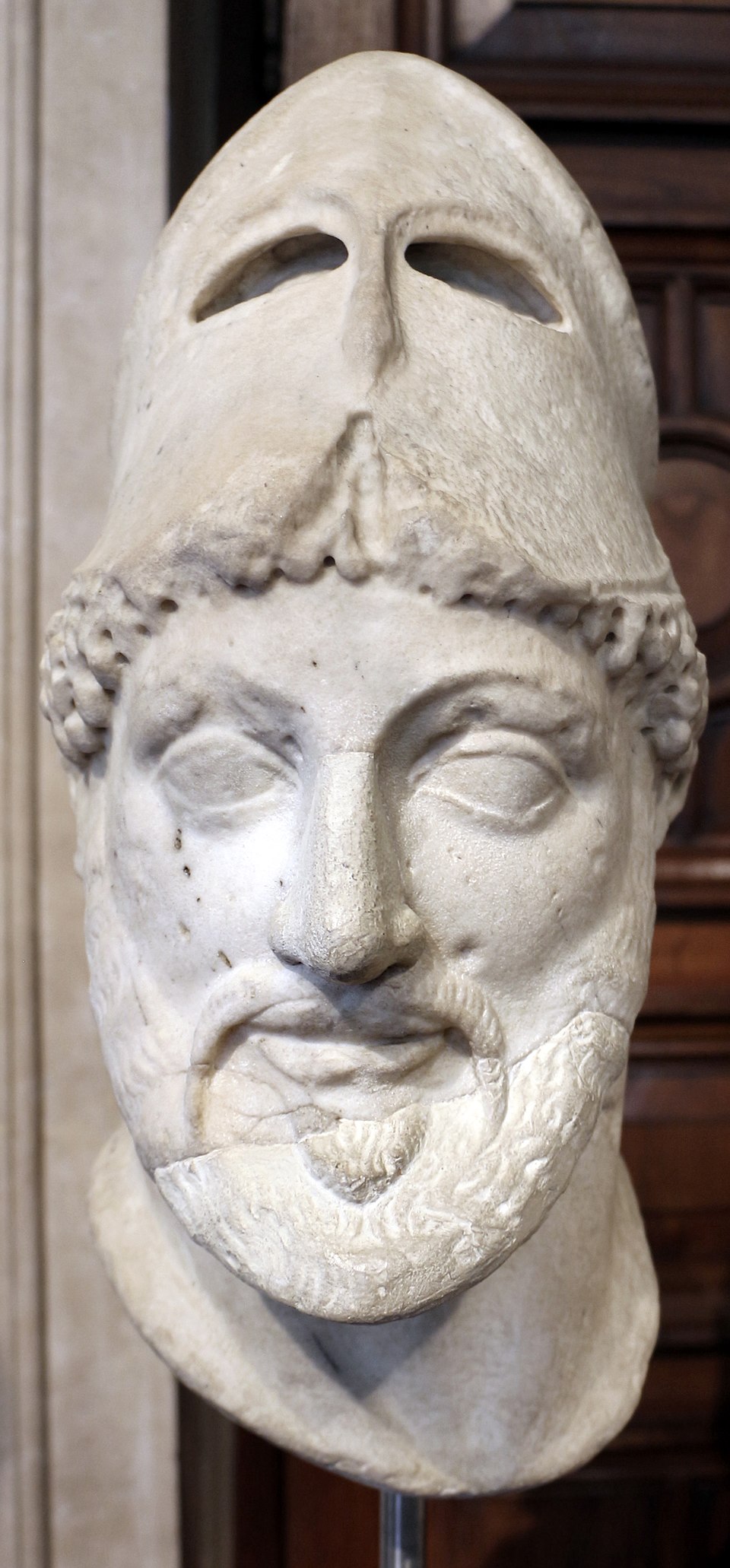
The Battle of Marathon stands as one of the most decisive engagements in ancient history, a pivotal moment when a small force of Athenian hoplites and their Plataean allies achieved what seemed impossible: the defeat of a vastly superior Persian invasion force. Fought on 12 August 490 BCE on the plains of Marathon, roughly 26 miles northeast of Athens, this remarkable victory not only preserved Athenian independence but also marked the beginning of the end of Persian imperial expansion into Europe.
Introduction
The battle's significance extends far beyond its immediate military consequences. It demonstrated the effectiveness of the Greek hoplite phalanx against Persian tactics, validated the principles of Athenian democracy in its first major test, and established a template for resistance against imperial oppression that would inspire future generations. The victory at Marathon gave the Greeks confidence that they could resist the mighty Persian Empire and laid the foundation for the subsequent victories at Salamis and Plataea that would ultimately secure Greek independence.
Key Events Leading to Marathon
- 546 BCE: Cyrus the Great conquers Lydia, bringing Persian power to the Aegean
- 499-493 BCE: Ionian Revolt against Persian rule; Athens provides limited support
- 492 BCE: First Persian invasion of Greece under Mardonius fails due to storm
- 491 BCE: Darius demands earth and water from Greek cities as tokens of submission
- 490 BCE: Second Persian invasion launched under Artaphernes and Datis
- August 490 BCE: Persian fleet lands at Marathon; decisive battle fought
Historical Background and Persian Expansion
The Rise of the Persian Empire
The Persian Empire under the Achaemenid dynasty had become the largest empire the world had yet seen, stretching from India to the borders of Greece. Under Cyrus the Great (559-530 BCE), the Persians had conquered the Lydian kingdom of Croesus in 546 BCE, bringing Persian power directly to the Greek cities of Ionia along the Anatolian coast. These prosperous Greek poleis, previously independent or under loose Lydian suzerainty, now found themselves subjects of the Great King.
The Persian administrative system, whilst generally tolerant of local customs and religions, imposed tribute obligations and required submission to Persian-appointed governors. This arrangement worked adequately for many subjects, but the fiercely independent Greek cities, with their traditions of self-governance and citizen participation, found Persian rule increasingly irksome.
The Ionian Revolt (499-493 BCE)
The spark that ignited the Persian Wars came from the Ionian cities' rebellion against Persian rule. Led by Aristagoras of Miletus, the Ionians sought support from mainland Greece. Sparta, the dominant military power, declined to become involved in what seemed a distant conflict. Athens, however, moved by ethnic solidarity and perhaps seeing an opportunity to expand its influence, sent twenty ships to aid the rebels. Eretria, a smaller city on Euboea, contributed five vessels.
The revolt initially achieved spectacular success, with the rebels burning Sardis, the Persian provincial capital. However, Persian resources proved overwhelming. The revolt was systematically crushed, culminating in the destruction of Miletus in 494 BCE. Whilst the Athenian contribution had been relatively modest, it was sufficient to earn the lasting enmity of Darius I, who reportedly had a servant remind him daily to 'remember the Athenians'.
Darius's Determination for Revenge
King Darius I viewed the Athenian intervention not merely as an act of war but as an intolerable affront to imperial dignity. The Persian Empire's legitimacy rested partly on the principle that resistance to the Great King was both futile and impious. The successful revolt, even if ultimately unsuccessful, had demonstrated that Persian power was not invincible and had encouraged other subject peoples to contemplate rebellion.
Beyond considerations of prestige, Darius recognised that leaving Greek intervention unpunished would invite future meddling in Persian affairs. The western frontier of the empire would never be secure whilst independent Greek cities remained capable of supporting rebellions amongst Persian subjects. The conquest of Greece thus became both a matter of imperial honour and practical security.
The Persian Invasion of 490 BCE
Strategic Planning and Objectives
Darius's invasion plan for 490 BCE reflected both the lessons learned from the earlier failed attempt and the specific objectives of the campaign. Rather than the overland route through Thrace that had proved disastrous in 492 BCE when storms destroyed much of the fleet, the Persians would approach Greece directly across the Aegean Sea, allowing for greater speed and reduced exposure to hostile tribes.
The expedition's primary objectives were punitive and specific: the destruction of Athens and Eretria as punishment for their interference in the Ionian Revolt, and the establishment of Persian authority over the Aegean islands and mainland Greece. The Persians brought with them Hippias, the former tyrant of Athens, indicating their intention to install a puppet regime rather than simply destroy the city.
Persian Forces and Command
The Persian expedition was commanded jointly by Artaphernes, nephew of Darius and experienced governor of Lydia, and Datis, a Median general with extensive experience in Aegean operations. This dual command structure, whilst potentially problematic, reflected Persian administrative practice and ensured that both the political and military aspects of the campaign were expertly managed.
The Persian force, whilst substantial, was not the massive host that would later invade under Xerxes. Ancient sources provide wildly varying figures, but modern scholars estimate the Persian army at between 15,000 and 25,000 men, including perhaps 1,000 cavalry. The force consisted primarily of Persian and Median troops, supplemented by contingents from various subject peoples including Sakai archers, whose composite bows gave them superior range to Greek weapons.
Persian Military Advantages
- Professional Army: Well-trained, experienced troops with standardised equipment and tactics
- Missile Superiority: Composite bows with greater range and accuracy than Greek javelins
- Cavalry Force: Mobile troops for reconnaissance, harassment, and exploitation
- Tactical Flexibility: Ability to combine different troop types in coordinated attacks
- Logistical Support: Naval supply line ensuring adequate provisions and equipment
The Destruction of Eretria
The Persian expedition's first target was Eretria, chosen both for its role in supporting the Ionian Revolt and as a demonstration of Persian power that might encourage Athenian submission. The Eretrians, despite advance warning and opportunities to seek refuge, chose to defend their city. The siege lasted six days, during which factional disputes within Eretria undermined the defence.
Betrayal by two prominent Eretrian citizens opened the city to the Persians, who proceeded to carry out Darius's instructions precisely: the temples were burned in retaliation for the burning of Sardis, and the population was enslaved for eventual deportation to Persia. This destruction served its intended purpose of demonstrating Persian ruthlessness whilst offering Athens a clear choice between submission and destruction.
Athens Prepares for War
The Democratic Response
News of Eretria's fall reached Athens whilst the Persians were crossing to Marathon, leaving little time for deliberation. The Athenian response demonstrated both the strengths and potential weaknesses of democratic decision-making under pressure. The ecclesia (popular assembly) met to determine the city's response to the Persian threat, with the debate centering on whether to seek terms with the Persians or fight despite the odds.
The decision to fight was far from inevitable. Athens faced the prospect of confronting a professional army with a force composed largely of citizen-soldiers whose military experience was limited to border conflicts and civil disputes. The Persian track record of success, demonstrated most recently at Eretria, provided little encouragement for optimism about the outcome of a direct confrontation.
Military Leadership and Strategy
Athenian military leadership in 490 BCE operated under the system of annually elected strategoi (generals), with the war archon Callimachus holding supreme command as polemarch. However, the most influential figure proved to be Miltiades, one of the ten generals, whose experience with Persian tactics during his years as tyrant of the Chersonese Peninsula made him invaluable for planning the Greek response.
Miltiades advocated an aggressive strategy that contradicted conventional wisdom about confronting Persian forces. Rather than waiting behind Athens' walls for a siege or seeking battle on more favourable terrain, he urged immediate march to Marathon to prevent the Persians from advancing on Athens. This bold approach reflected both tactical considerations and the political reality that delay might allow pro-Persian factions within Athens to gain influence.
The Appeal to Sparta
Recognising the enormity of the challenge, Athens dispatched the professional runner Pheidippides to Sparta to request military assistance. The appeal stressed both the immediate threat to Athens and the broader danger that Persian success would pose to all Greek independence. The message reportedly covered the 140 miles to Sparta in two days, an extraordinary feat of endurance that demonstrates the urgency Athens attached to securing Spartan support.
Sparta's response proved disappointing but not entirely unexpected. Whilst expressing sympathy for Athens and acknowledging the Persian threat, the Spartans cited religious obligations that prevented immediate military action. The Carneia, a sacred festival honouring Apollo, required Spartan forces to remain at home until the full moon, still several days away. This excuse, whilst probably genuine, reflected Sparta's caution about committing to a battle where defeat seemed probable.
The March to Marathon
Athenian Military Organisation
The Athenian army that marched to Marathon represented a cross-section of Attic society organised according to the tribal system established by Cleisthenes' democratic reforms. Each of the ten tribes contributed a regiment of approximately 1,000 men, creating a force of roughly 10,000 Athenian hoplites. This citizen army was supplemented by light troops and slaves serving in supporting roles, though the exact numbers remain uncertain.
The hoplite force consisted primarily of citizens wealthy enough to afford the expensive bronze armour, shield, spear, and sword that defined the hoplite panoply. These men, drawn from the farming and commercial classes, had trained regularly in their local gymnasia and possessed the physical fitness and basic military skills necessary for phalanx warfare, though few had experience of large-scale battle.
Plataea's Crucial Alliance
As the Athenian army prepared to march, an unexpected but crucial reinforcement arrived from Plataea, a small Boeotian city that had previously sought Athenian protection against Theban aggression. The Plataean force, numbering perhaps 1,000 hoplites, may have seemed insignificant compared to the Persian threat, but their arrival provided both practical military value and enormous moral support.
The Plataean decision to honour their alliance with Athens despite the odds demonstrated that Athens was not entirely alone in its resistance to Persia. More practically, the additional troops allowed the Greeks to extend their line and reduced the danger of envelopment that would have been critical with a smaller force. The Plataeans were positioned on the left wing, a place of honour that recognised their contribution whilst placing them in a relatively secure position.
The Strategic Situation at Marathon
Marathon offered several advantages for both armies, explaining why the Persians chose it as their landing site and why the Greeks accepted battle there. For the Persians, the broad plain provided excellent terrain for their cavalry and allowed them to deploy their forces in the flexible formations that characterised Persian tactics. The bay offered a secure anchorage for their fleet and facilitated easy re-embarkation if withdrawal became necessary.
For the Greeks, Marathon's position blocked the most direct route from the landing beach to Athens, forcing the Persians either to fight for passage or seek an alternative approach that would grant Athens additional time to prepare. The surrounding hills provided observation points and potential refuge if the battle went badly, whilst the narrower sections of the plain reduced the Persians' ability to employ their numerical superiority effectively.
The Opposing Forces
Persian Army Composition and Tactics
The Persian army that disembarked at Marathon represented the military machine that had conquered most of the known world. The core consisted of Persian and Median infantry, the so-called 'Immortals', equipped with leather armour, large shields, short spears, and bows. These professional soldiers fought in loose formations that emphasised flexibility and the integration of missile fire with close combat.
Persian tactical doctrine relied heavily on archery to disrupt enemy formations before close engagement. The composite bows used by Persian troops could penetrate most armour at medium range and had a significantly longer reach than Greek javelins. Once enemy formations were disrupted by missile fire, Persian infantry would advance to finish off disorganised opponents, supported by cavalry that could exploit gaps and pursue fleeing enemies.
Persian Tactical Doctrine at Marathon
- Phase 1: Cavalry reconnaissance and harassment of enemy deployment
- Phase 2: Massed archery volleys to disrupt Greek phalanx formation
- Phase 3: Infantry advance supported by continued arrow fire
- Phase 4: Cavalry exploitation of gaps and pursuit of routing enemies
Greek Hoplite System
The Greek force that faced the Persians represented the culmination of two centuries of hoplite tactical development. Each hoplite carried a large bronze shield (aspis), a long thrusting spear (dory), and a sword as a secondary weapon. The characteristic bronze armour included a helmet, breastplate or corselet, and greaves, providing excellent protection against most weapons but requiring considerable strength and endurance to wear effectively.
Hoplite tactics emphasised close formation fighting in the phalanx, a dense formation typically eight ranks deep where each man's shield protected his neighbour's unshielded side. The phalanx's strength lay in its cohesion and the moral support provided by fighting alongside neighbours and kinsmen. Once engaged, the phalanx became nearly unstoppable in frontal combat, but it was vulnerable to missile attack and flanking manoeuvres.
Comparative Strengths and Weaknesses
The tactical matchup at Marathon pitted two very different military systems against each other. The Persian advantage lay in numbers, professional training, superior missile weapons, and cavalry support. Persian troops were accustomed to fighting as units and following orders from experienced officers, whilst their equipment was standardised and well-maintained.
Greek advantages were less obvious but equally significant. The hoplite panoply provided superior protection in close combat, whilst the long spear gave Greek infantry a reach advantage once formations met. More importantly, the Greeks were fighting for their homes and freedom, providing motivation that might compensate for numerical and tactical disadvantages. The Athenian army also benefited from fighting on familiar terrain and possessed detailed knowledge of local conditions.
Pre-Battle Manoeuvring
The Five-Day Standoff
After both armies had deployed on the Marathon plain, neither commander immediately sought battle. The Persians, following established doctrine, waited for their cavalry to complete reconnaissance and for psychological pressure to weaken Greek resolve. Persian commanders may also have hoped that pro-Persian factions within Athens would emerge to negotiate surrender, making battle unnecessary.
The Greeks used this time to study Persian dispositions and finalise their tactical plan. Miltiades, whose experience with Persian methods proved invaluable, observed that the Persian cavalry was not immediately available, perhaps because the horses required time to recover from the sea voyage or because the cavalry was conducting operations elsewhere. This absence presented an opportunity that would prove decisive.
Intelligence and Reconnaissance
Both sides conducted extensive reconnaissance during the standoff period. Persian cavalry patrols tested Greek positions and sought information about Greek strength and morale, whilst also attempting to identify potential routes for flanking manoeuvres. The Greeks, lacking cavalry, relied on light troops and local knowledge to monitor Persian activities and assess enemy capabilities.
Critical intelligence came from Greek sympathisers who observed Persian embarkation procedures and reported that a significant portion of the Persian fleet, possibly including cavalry transports, had departed Marathon during the night. This information, whether accurate or not, may have influenced Miltiades' decision to attack on the morning of 12 August.
The Council of War
The Greek decision to attack resulted from a council of war where the ten Athenian generals were evenly divided between those favouring immediate battle and those preferring to await Spartan reinforcements. Miltiades' arguments for immediate action proved decisive, possibly influenced by intelligence suggesting that further delay would allow the Persians to strengthen their position or attempt a direct assault on Athens.
The crucial vote came from Callimachus, the war archon, whose constitutional position gave him the deciding voice in military decisions. Miltiades reportedly argued that Athens faced a moment of supreme crisis where bold action offered the only hope of survival. Delay would strengthen the enemy and weaken Greek morale, whilst immediate attack might catch the Persians unprepared and demonstrate that they were not invincible.
The Battle of Marathon
Miltiades' Tactical Innovation
Miltiades' battle plan represented a radical departure from conventional hoplite tactics, demonstrating both desperate necessity and tactical brilliance. Recognising that the Greek line would be dangerously thin if deployed in the traditional eight-rank phalanx across the entire Persian front, Miltiades weakened his centre to only four ranks whilst strengthening his wings to the traditional depth.
This deployment served multiple purposes. The weakened centre invited Persian attack whilst ensuring that the Greeks were not outflanked, as the ends of the line rested on impassable terrain. The strengthened wings provided the striking power necessary to break through Persian flanks once the centre had drawn the enemy forward. The plan required precise timing and extraordinary discipline from troops with limited battle experience.
Greek Battle Formation
- Right Wing: Athenian tribes under traditional formation, eight ranks deep
- Centre: Weakened to four ranks, designed to give ground under pressure
- Left Wing: Plataeans and remaining Athenian tribes, eight ranks deep
- Total Width: Approximately one mile, matching Persian deployment
The Greek Advance
The battle began at dawn on 12 August 490 BCE when Miltiades ordered the advance. The Greeks began their approach at a measured pace, maintaining formation whilst crossing the mile of open ground that separated the armies. As they came within range of Persian archery, approximately 200 yards from the enemy line, Miltiades ordered the charge.
This moment marked the crucial test of Greek discipline and courage. The hoplites, already burdened by heavy armour and equipment, had to sprint the final distance under arrow fire whilst maintaining the formation cohesion that made their tactics effective. The sight of the Greek charge reportedly astonished the Persians, who had never seen infantry advance at speed without cavalry or archer support.
The Clash of Battle Lines
The initial collision demonstrated the effectiveness of both tactical systems. In the centre, where Greek ranks were thin, Persian numbers and professional skill quickly began to tell. The Greek line bent backwards under pressure, with some units beginning to break as Persian infantry pushed forward supported by concentrated archery.
On the wings, however, the situation developed very differently. The deep Greek formations crashed into the Persian flanks with devastating effect. The long Greek spears and heavy armour proved decisive in close combat, whilst the psychological impact of the charge disrupted Persian cohesion. Persian units on the flanks began to give ground, then to break and flee towards their ships.
The Double Envelopment
As the Persian centre advanced in pursuit of the retreating Greek centre, Miltiades executed the most brilliant aspect of his plan. The victorious Greek wings, having broken the Persian flanks, wheeled inward to attack the advancing Persian centre from both sides. This double envelopment, reminiscent of Hannibal's later victory at Cannae, trapped the best Persian troops in a killing zone.
The Persian centre, suddenly attacked from three directions and unable to employ their archery effectively in close combat, found themselves overwhelmed by heavily armoured opponents fighting with the desperation of men defending their homeland. What had seemed like a Persian victory quickly transformed into a catastrophic defeat as units broke and fled towards the beaches.
The Persian Rout and Pursuit
Collapse of Persian Morale
The sudden reversal of fortune at Marathon demonstrated the fragility of military morale and the decisive importance of leadership in ancient warfare. The Persian army, which had dominated the battlefield's centre, found itself surrounded and under attack from multiple directions. Professional soldiers accustomed to victory discovered that their tactical advantages meant nothing when caught in an impossible tactical situation.
The breakdown of Persian formation led to panic as individual soldiers abandoned their units to seek safety. The presence of the Persian fleet, visible in the bay, provided a clear escape route that paradoxically accelerated the collapse by encouraging flight rather than resistance. Units that might have rallied and fought desperately if trapped completely instead dissolved as men sought individual salvation.
The Fighting Retreat to the Ships
The Persian retreat to their ships became a running battle that cost the invaders heavily in both men and equipment. Greek hoplites, energised by their unexpected success and fighting on familiar terrain, pursued relentlessly. The Persians' superior archery meant little in the confusion of a general retreat, whilst Greek armour and weapons proved decisive in the running combats that characterised the pursuit.
Some Persian units attempted to form rear-guard actions to cover the retreat, but the speed of the Greek advance and the broken nature of the terrain made coordinated resistance nearly impossible. The marshes and streams around Marathon, which had constrained the initial deployment, now became death traps for fleeing soldiers burdened with equipment and exhausted by combat.
The Struggle for the Ships
The final phase of the battle occurred on the beaches where the Persian fleet waited. Greek pursuit had been so rapid that many ships had not completed their loading when the first fleeing soldiers reached the shore. The resulting confusion created opportunities for Greek forces to capture ships and prisoners whilst preventing Persian embarkation.
The death of Callimachus, the Athenian war archon, occurred during this final phase as Greek forces attempted to capture Persian vessels. This loss, whilst tragic, demonstrated that the Greeks fought with remarkable tenacity even after victory was assured, pursuing every opportunity to damage the enemy rather than simply celebrating their success.
Casualties and Losses
- Persian Dead: Approximately 6,400 according to Herodotus
- Greek Dead: 192 Athenians (including Callimachus) and 11 Plataeans
- Persian Ships Captured: Seven triremes
- Persian Survivors: Most escaped to the fleet and sailed away
The Aftermath and Consequences
The Race Back to Athens
Victory at Marathon provided only temporary respite for Athens, as intelligence quickly revealed that the Persian fleet was sailing directly for Athens harbour, possibly hoping to find the city defenceless with its army absent. Miltiades immediately grasped the danger and ordered his exhausted troops to march back to Athens as quickly as possible.
The Athenian army completed the approximately 25-mile march from Marathon to Athens in a single day, arriving just as the Persian fleet appeared off Phalerum. The sight of the victorious army arrayed on the heights above the harbour convinced the Persian commanders that further attempts on Athens would prove futile. After observing the Greek preparations, the Persian fleet sailed away, ending the immediate threat to Attica.
Political Ramifications in Athens
The victory at Marathon transformed Athenian politics and society in profound ways. The success validated the democratic system's ability to defend itself and demonstrated that citizen-soldiers could defeat professional armies when fighting for their freedom. This confidence would prove crucial in the subsequent Persian Wars and in Athens' emergence as a major power in the Greek world.
Miltiades, the architect of victory, became a popular hero but also faced the challenges that accompanied sudden fame in a democratic society. His subsequent expedition against Paros ended in failure and disgrace, demonstrating that democratic leaders who lived by military success could also die by it. The contrast between his triumph at Marathon and his later downfall illustrated both the opportunities and dangers inherent in democratic politics.
The Legend of Pheidippides
The battle gave birth to one of history's most enduring athletic traditions through the story of Pheidippides' run from Marathon to Athens with news of victory. According to later tradition, the messenger ran the entire distance without stopping and died after delivering his message. This tale, whilst probably legendary, captured the spirit of sacrifice and determination that characterised the Marathon campaign.
The modern marathon race, first incorporated into the Olympic Games in 1896, commemorates this legendary run and has made Marathon one of the most recognised place names in the world. The race distance of 26.2 miles, established for the 1908 London Olympics, roughly matches the distance from the battlefield to ancient Athens.
Strategic and Tactical Analysis
Factors in the Greek Victory
The Greek victory at Marathon resulted from a combination of tactical innovation, strategic timing, and moral factors that overcame apparent Persian advantages. Miltiades' decision to weaken his centre whilst strengthening his wings represented a calculated risk that could have proved disastrous but instead created the opportunity for double envelopment.
The absence of Persian cavalry, whether due to logistics, tactical deployment, or embarkation for an attack on Athens, removed the Persian army's most flexible component and reduced their ability to exploit breakthroughs or prevent Greek flanking manoeuvres. Without cavalry support, Persian archery became less effective and their infantry found themselves at a severe disadvantage in close combat.
Critical Success Factors
- Tactical Innovation: Miltiades' unconventional deployment
- Timing: Attack when Persian cavalry was absent
- Discipline: Greek ability to maintain formation during charge
- Equipment Advantage: Hoplite armour and spears in close combat
- Motivation: Fighting for homeland vs. fighting for empire
Persian Tactical Errors
The Persian defeat at Marathon reflected both Greek innovation and Persian tactical mistakes. The decision to deploy the main force to receive the Greek attack, rather than using superior mobility to choose the time and place of engagement, played to Greek strengths whilst neutralising Persian advantages.
More significantly, Persian commanders appear to have underestimated both Greek tactical capability and fighting spirit. The assumption that Greek citizen-soldiers would break under pressure from professional troops proved catastrophically wrong, whilst the failure to anticipate tactical innovation allowed the Greeks to achieve surprise despite attacking across open ground.
Lessons for Ancient Warfare
Marathon demonstrated several principles that would influence military thinking for centuries. The importance of morale and motivation in determining battle outcomes became apparent, as did the value of tactical flexibility over rigid adherence to established methods. The battle showed that numerical superiority meant little if it could not be brought to bear effectively.
The engagement also highlighted the continuing importance of heavy infantry in ancient warfare, despite the growing sophistication of archery and cavalry. The hoplite phalanx, properly deployed and led, remained a formidable tactical system capable of defeating more flexible but less heavily protected opponents.
The Broader Historical Context
Impact on the Persian Empire
Marathon's immediate impact on the Persian Empire was limited but significant. The defeat represented the first major reverse suffered by Persian arms in Europe and demonstrated that the empire was not invincible. News of the defeat probably encouraged resistance movements elsewhere in the empire whilst raising questions about Persian military competence and imperial destiny.
For Darius personally, Marathon represented an intolerable humiliation that demanded redress. The defeat made another, larger invasion inevitable, as the Great King could not allow such an affront to imperial dignity to stand. Planning for what would become Xerxes' massive invasion of 480-479 BCE began immediately, with Marathon serving as both provocation and cautionary example.
Greek Unity and Confidence
The victory's impact on Greek morale and unity proved even more significant than its immediate military consequences. Marathon demonstrated that Persian power could be resisted successfully and that Greek military methods remained viable against eastern innovations. This confidence would prove crucial when Xerxes launched his massive invasion ten years later.
The battle also enhanced Athenian prestige throughout the Greek world and began the process that would lead to Athenian leadership of the Delian League. Athens had proved its worth as a defender of Greek freedom and earned the right to be considered alongside Sparta as a major power. This reputation would be crucial in organising resistance to future Persian threats.
Democratic Validation
Marathon provided crucial validation for the Athenian democratic experiment at a critical moment in its development. The victory demonstrated that citizen-soldiers fighting for their freedom could match or exceed the performance of professional armies serving autocratic rulers. This success gave democratic ideology a military validation that strengthened its appeal both within Athens and throughout the Greek world.
The battle also showed that democratic decision-making, whilst sometimes slow and contentious, could produce effective military leadership and strategic innovation. Miltiades' tactical brilliance emerged from the competitive environment of Athenian politics, where leaders had to prove their worth through results rather than hereditary privilege.
Archaeological Evidence
The Battlefield Today
The Marathon battlefield has been extensively studied by archaeologists and historians seeking to understand the precise details of the engagement. The ancient topography remains largely identifiable, with the marshes and streams that influenced the battle's course still visible. Excavations have uncovered arrow heads, weapons, and other artifacts that confirm the battle's location and provide evidence about the combatants' equipment.
The Soros, a burial mound erected over the Athenian dead, stands as a permanent memorial to the battle and has yielded important archaeological evidence about Greek burial practices and the battle's casualties. Recent investigations using ground-penetrating radar and other modern techniques continue to reveal new details about the engagement and its aftermath.
Material Evidence
Archaeological finds from Marathon include Persian arrow heads, Greek spear points, and fragments of armour that provide concrete evidence about the combatants' equipment and fighting methods. The distribution of these finds helps confirm ancient accounts of the battle's course and the areas where the heaviest fighting occurred.
Excavations in the wider Marathon area have also revealed evidence of the Persian landing and temporary occupation, including pottery, coins, and other artifacts that illuminate the practical aspects of the campaign. These finds complement literary sources and provide a more complete picture of the events surrounding the battle.
Literary and Cultural Legacy
Ancient Commemorations
Marathon quickly became a central element in Athenian cultural identity and Greek historical consciousness. The battle was commemorated in art, literature, and public ceremonies that kept its memory alive for future generations. The painted Stoa Poikile in the Athenian Agora featured a famous depiction of the battle, whilst tragic and comic poets regularly referenced the victory in their works.
Annual ceremonies at the Soros honoured the fallen whilst celebrating the victory, creating a tradition of public commemoration that reinforced civic values and democratic ideology. These observances helped transform Marathon from a historical event into a foundational myth that shaped Athenian identity for centuries.
Historical Writing
Herodotus's account of Marathon in his Histories provides the most detailed ancient narrative of the battle and has shaped all subsequent understanding of the engagement. His emphasis on the moral and cultural factors that contributed to Greek victory reflects the battle's significance in the Greek historical imagination and its role in defining Greek identity against Persian otherness.
Later ancient historians, including Thucydides, Plutarch, and Pausanias, added details and interpretations that enriched the Marathon tradition whilst sometimes contradicting earlier accounts. These variations reflect both the evolution of historical understanding and the continuing importance of Marathon in Greek cultural memory.
Modern Interpretations
Marathon has continued to inspire writers, artists, and thinkers throughout history as a symbol of freedom's struggle against oppression. Romantic poets like Byron celebrated the battle as evidence of democracy's superiority over despotism, whilst modern historians have seen it as a turning point in the relationship between East and West.
The battle's modern legacy extends beyond academic history to include its role in inspiring resistance movements and democratic ideologies. The image of ordinary citizens defeating a professional army through courage and unity has resonated with democratic movements worldwide, making Marathon a universal symbol of popular resistance to tyranny.
Conclusion
The Battle of Marathon stands as one of history's most significant military engagements, a moment when tactical innovation, strategic timing, and moral conviction combined to produce an outcome that changed the course of world history. The victory preserved Athenian independence, validated democratic principles, and demonstrated that even the mightiest empires could be resisted by determined defenders of freedom.
The battle's tactical lessons influenced military thinking for centuries, showing the continued importance of morale, leadership, and innovative thinking in determining battlefield outcomes. Miltiades' double envelopment became a model for ambitious commanders, whilst the effectiveness of the hoplite phalanx validated Greek military methods and encouraged their adoption throughout the Mediterranean world.
Beyond its immediate military significance, Marathon served as a crucial validation of democratic ideology at a critical moment in its development. The victory demonstrated that citizen-soldiers could match professional armies when fighting for their homes and freedom, providing democratic Athens with the confidence and prestige necessary to lead Greek resistance to future Persian threats.
'At Marathon, a few thousand Greeks stopped the advance of Asia and preserved European civilisation. The battle's importance lies not in the numbers engaged but in the principles at stake.' - Modern historian John Stuart Mill
The battle's cultural legacy has proved as enduring as its military significance. Marathon became a symbol of the struggle between freedom and tyranny, democracy and despotism, West and East that continues to resonate in modern political discourse. The image of ordinary citizens rising to defend their homeland against overwhelming odds provides inspiration for democratic movements worldwide.
Archaeological evidence continues to illuminate the practical details of the engagement whilst confirming the essential accuracy of ancient accounts. The battlefield itself stands as a monument to the courage and tactical innovation that achieved this remarkable victory, whilst the annual marathon races ensure that Marathon's memory reaches new generations of athletes and spectators.
Perhaps most importantly, Marathon demonstrated that historical outcomes are not predetermined and that small groups of determined individuals can indeed change the course of world events. The victory showed that moral factors - fighting for home, family, and freedom - could overcome material disadvantages and that innovative leadership could find ways to turn apparent weaknesses into decisive strengths.
The Battle of Marathon thus represents more than a military victory; it stands as a testament to the power of democratic values, innovative thinking, and moral conviction to overcome seemingly impossible odds. In an age when these values again face challenges from authoritarian powers, Marathon's example remains as relevant and inspiring as it was 2,500 years ago, reminding us that the price of freedom is eternal vigilance and that ordinary citizens, properly led and motivated, can achieve extraordinary things in defence of their liberty.