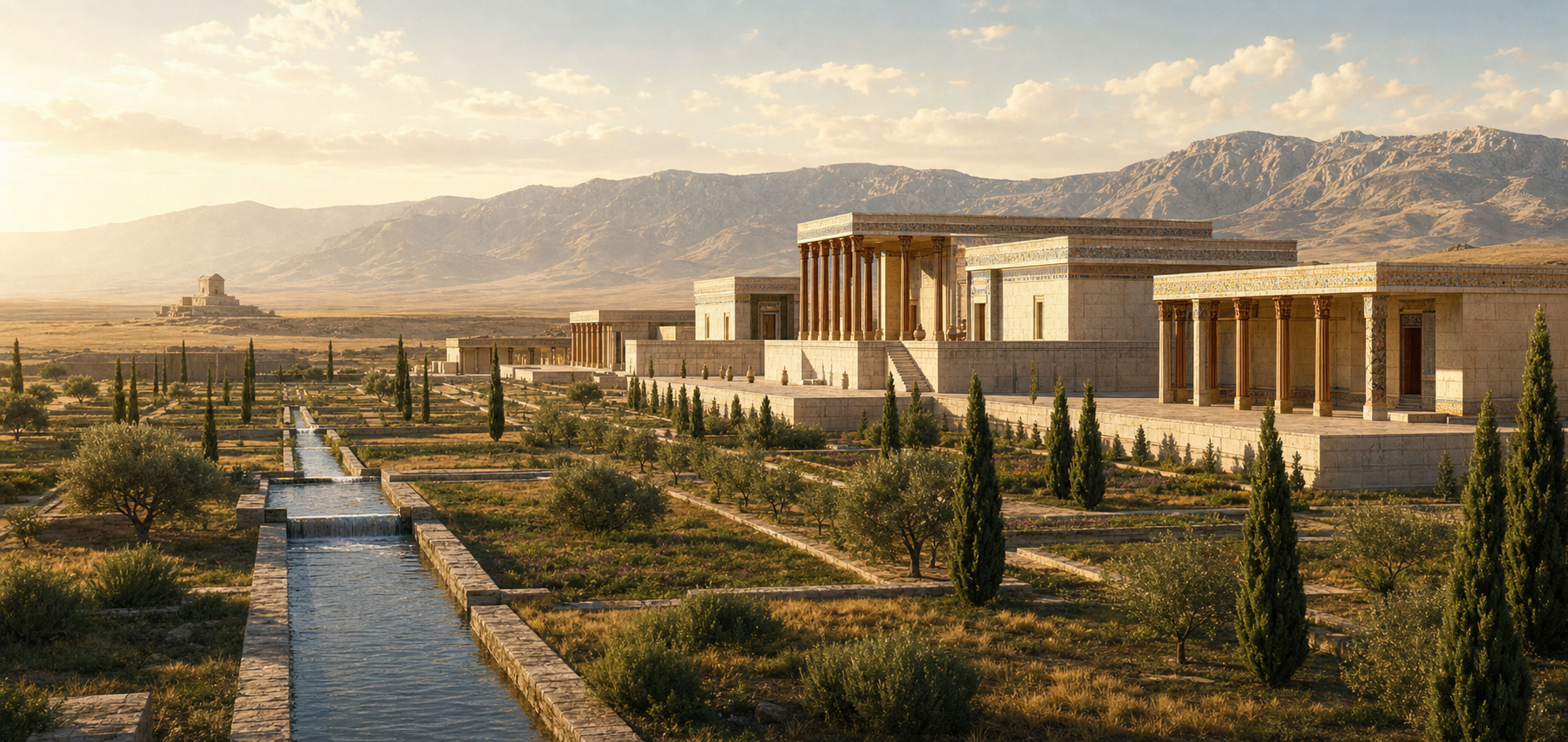
Sparta occupies a singular position in the history of the ancient Greek world. Unlike Athens, whose legacy rests upon democracy, philosophy, drama, and architectural grandeur, Sparta developed into a society fundamentally organised around military preparedness, civic discipline, and constitutional stability. From the Archaic through the Classical period, it became both a dominant military power and a subject of intense intellectual curiosity among ancient writers.
This monograph examines Sparta not as myth, but as a historical system. It explores the interplay between geography, conquest, land ownership, demography, political structure, economic foundations, and military organisation. It further analyses Spartan constitutional theory within broader Greek political thought and situates Sparta within long-term historical development rather than isolated heroic episodes.
Geography and Territorial Expansion
The Spartan state developed within the Eurotas valley in Laconia, a fertile agricultural basin surrounded by mountain ranges that provided both isolation and natural defence. Unlike maritime powers such as Athens, Sparta was fundamentally land-oriented. Its early expansion focused not on overseas colonisation but on territorial conquest within the Peloponnese.
The conquest of Messenia was transformative. This fertile region to the west provided vast agricultural land and, crucially, a large subjected population known as Helots. Unlike chattel slaves, Helots were state-bound agricultural labourers compelled to produce surplus for Spartan masters. This territorial model created a unique political economy: Sparta became a military ruling caste governing a productive agrarian hinterland.
This conquest fundamentally shaped Spartan society. The need to control a numerically superior subjected population required constant military readiness and internal discipline. Thus, geography and conquest together forged the conditions for Sparta’s militarised structure.
Political Institutions and Constitutional Theory
Sparta’s political system combined monarchy, oligarchy, and limited civic participation. Ancient observers described this as a mixed constitution, blending stability with controlled representation. Modern constitutional theory recognises Sparta as an early example of institutional balance designed to prevent concentration of power.
Sparta's key political institutions included:
- The dual kingship ensured continuity in military command and religious ritual
- The Gerousia provided aristocratic oversight and legal authority
- The ephorate functioned as an executive supervisory board with significant power, including oversight of kings
- The citizen assembly offered legitimacy, though debate was constrained
From a theoretical perspective, Sparta demonstrates an early form of separation of powers. Authority was diffused across institutions, preventing tyrannical consolidation. Yet unlike Athenian democracy, participation was restricted to a narrow citizen body. Stability was valued above innovation.
Aristotle criticised Sparta for certain imbalances, particularly regarding wealth concentration and the power of ephors. Nevertheless, he recognised its durability as evidence of constitutional resilience.
Economics and Agrarian Foundations
Sparta’s economy was overwhelmingly agrarian. The Helots cultivated land divided into kleroi, allotments assigned to Spartan citizens. Each citizen household was theoretically entitled to an equal share sufficient to sustain participation in communal life and military service.
Sparta's distinctive economic policies included:
- Discouragement of trade and luxury
- Limited coinage system
- Use of iron currency to reduce wealth accumulation
- Economic simplicity to reinforce social equality within the citizen class
Over time, land ownership became increasingly concentrated due to:
- Inheritance patterns that favoured consolidation
- Dowry systems that transferred property
- Demographic decline reducing the citizen population
- By the fourth century BCE, a small number of families controlled significant portions of land, undermining the theoretical equality of Spartiates
Sparta’s economic model depended heavily on Helot labour. Without this coerced agricultural system, the Spartan military caste could not have sustained full-time training and communal obligations.
Land Ownership and Wealth Distribution
Land was the foundation of Spartan citizenship. Ownership of a kleros was essential for maintaining status and contributing to communal messes. Loss of economic capacity could result in atimia, the loss of full citizen rights.
Over generations, economic inequalities emerged. Women could inherit property, and as male citizen numbers declined, property consolidation accelerated. Aristotle observed that Spartan women controlled substantial land wealth, which he argued contributed to fiscal imbalance.
The concentration of land weakened the citizen body, as fewer men possessed the economic means to maintain full status. This demographic-economic interaction was central to Spartan decline.
Demography and the Citizen Crisis
Sparta's demographic trajectory was a critical structural weakness caused by:
- Strict citizenship requirements
- Heavy military losses in warfare
- Economic consolidation excluding potential citizens
- By the fourth century BCE, the citizen body had shrunk dramatically
This demographic contraction undermined military effectiveness. A system reliant on a narrow elite could not easily adapt to population decline. Unlike Athens, Sparta lacked mechanisms for incorporating large numbers of new citizens.
The interaction between demography and land ownership created a feedback loop: fewer citizens meant greater land concentration; greater land concentration excluded potential citizens.
Military Organisation and Strategic Doctrine
Sparta’s military superiority derived from discipline, cohesion, and training embedded in the agoge. The hoplite phalanx required coordination and trust. Spartan soldiers internalised collective identity, enhancing battlefield performance.
Strategically, Sparta initially focused on land warfare. During the Peloponnesian War, however, it developed naval capabilities with Persian financial support. This adaptability proved decisive in defeating Athens.
Military dominance reinforced political ideology through core virtues:
- Courage in the face of danger
- Obedience to authority and tradition
- Endurance under hardship
- These were not merely battlefield virtues but civic expectations for all citizens
The Collapse of Hegemony
Sparta's irreversible decline resulted from multiple factors:
- The Battle of Leuctra in 371 BCE shattered Spartan military prestige
- The liberation of Messenia deprived Sparta of agricultural surplus
- Demographic contraction reduced the citizen body
- Economic inequality undermined the traditional system
- Combined, these factors marked irreversible decline
Subsequent reform attempts could not restore the classical system. Under Roman rule, Sparta survived more as a cultural relic than as a political force.
Conclusion
Sparta represents one of the most extraordinary experiments in collective discipline and state organisation in the ancient world. Its political institutions, social hierarchy, and educational system were all directed towards preserving stability and military supremacy.
Although its period of dominance was relatively brief, Sparta’s influence upon Greek history was profound. It challenged Athens, reshaped alliances, and provided a powerful alternative model of civic life. Its legacy endures not only in historical scholarship but also in broader reflections upon power, order, and the sacrifices demanded by collective security.
Athens and Sparta: A Comparative Study of Power, Society, and Political Order
Introduction to the Comparative Framework
Athens and Sparta represent two contrasting models of Greek civilisation. Both were powerful, influential, and deeply rooted in Hellenic culture, yet their political systems, economic foundations, social hierarchies, and strategic priorities differed profoundly.
This comparative study examines structural differences rather than heroic narratives. It analyses constitutional design, land ownership patterns, demographic trends, economic systems, military organisation, and ideological frameworks.
Constitutional Design Compared
Athens developed a direct democracy in which male citizens participated in assembly debates, jury service, and office-holding. Political legitimacy rested upon participation and persuasion.
Sparta developed a mixed constitution emphasising stability and balance among monarchy, oligarchy, and limited popular consent. Legitimacy derived from tradition and continuity.
Where Athens embraced change and debate, Sparta prioritised order and institutional permanence.
Economic Systems and Resource Management
Athenian economy was diversified through:
- Maritime trade networks
- Silver mining operations
- Tribute from allied cities
- Artisanal production and crafts
- Its power was naval and commercial
Spartan economy was agrarian and coercive, reliant on Helot labour and territorial control. It was land-based and inward-looking.
Athens generated revenue through empire and trade; Sparta extracted surplus through subjugation of neighbouring populations.
Land Ownership and Social Stability
Athenian land ownership was varied, and while inequalities existed, citizenship was not strictly dependent upon agricultural allotments.
Spartan citizenship was inseparable from land ownership. Economic decline directly translated into political exclusion.
This structural rigidity limited Sparta’s adaptability compared with Athens.
Demography and Political Resilience
Athens possessed mechanisms for population growth, including metic integration, though without full citizenship, and economic expansion.
Sparta’s restrictive citizenship model led to long-term demographic contraction. Its political system could not easily incorporate outsiders.
Demographic flexibility gave Athens greater resilience over time.
Military Doctrine and Strategic Culture
Sparta excelled in land warfare, producing highly disciplined infantry formations.
Athens mastered naval strategy, projecting power across the Aegean.
The Peloponnesian War demonstrated that adaptability and external financing could overcome traditional specialisation.
Ideological Foundations
Athenian ideology celebrated:
- Freedom of speech (parrhesia)
- Civic debate and democratic participation
- Cultural achievement in arts and philosophy
Spartan ideology emphasised:
- Obedience to authority and tradition
- Equality among citizens (homoioi)
- Austerity and simplicity in lifestyle
- Military honour and prowess
Both systems produced stability for periods of time, but through radically different principles.
Long-Term Historical Impact
Athens influenced later developments in:
- Democratic theory and practice
- Philosophy and rational inquiry
- Education systems across Europe and beyond
Sparta influenced discussions of:
- Discipline and social order
- Civic virtue and duty
- Constitutional balance and mixed government
Together, they offer contrasting models of governance, illustrating how different structural choices shape political destiny.