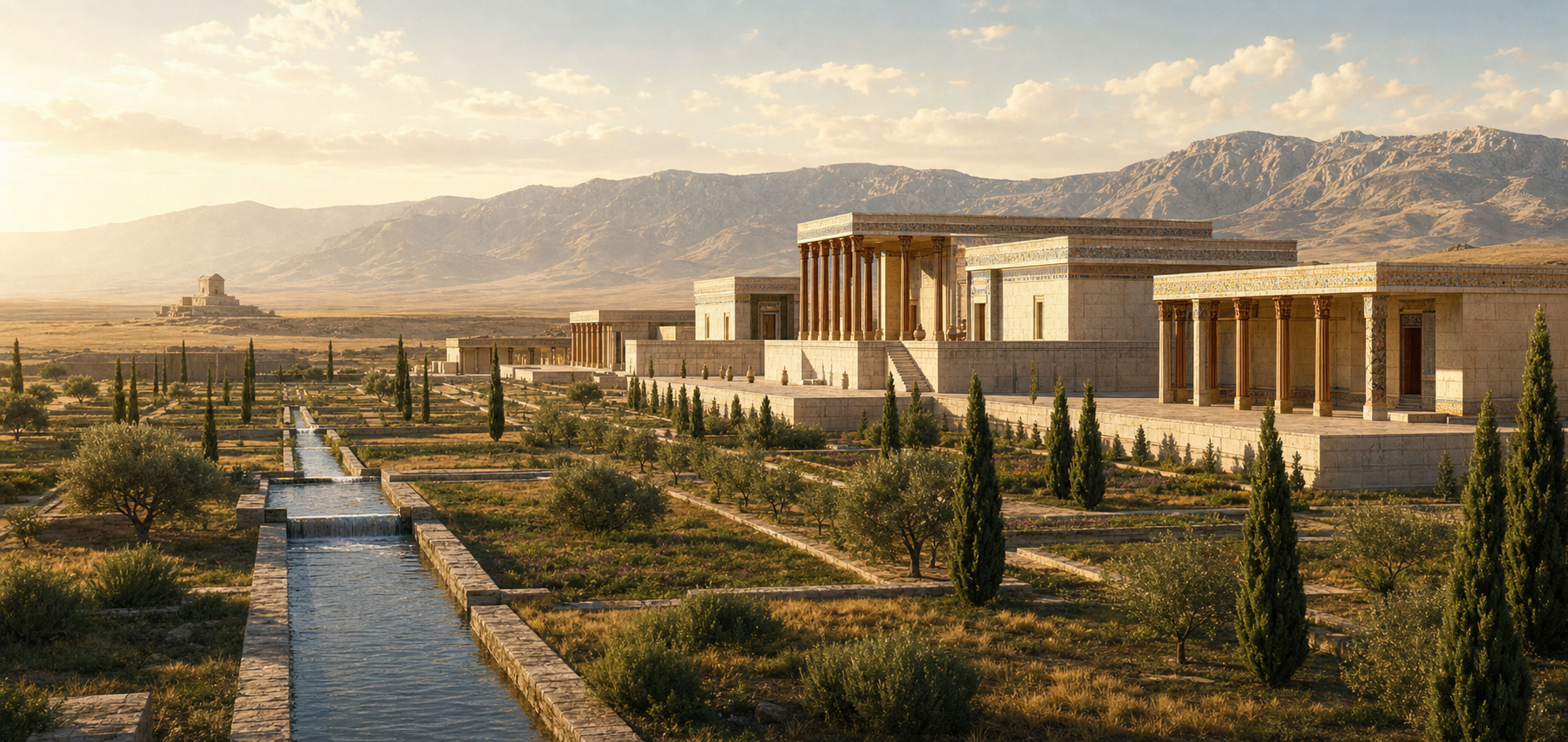
Arcadia was a mountainous and largely inland region in the central Peloponnese, occupying a distinctive place in the history and imagination of the ancient Greek world. Unlike coastal regions renowned for maritime trade and naval power, Arcadia was characterised by rugged terrain, pastoral life, and a strong sense of regional identity. Although it did not produce a single dominant imperial city-state, Arcadia played an important political and military role, particularly during the Classical and Hellenistic periods. It also became a powerful symbol in Greek literature and later European thought, representing simplicity, harmony with nature, and rural virtue.
Geographic Setting and Natural Landscape
Arcadia lay in the mountainous heart of the Peloponnese, bordered by Achaea to the north, Elis to the west, Messenia and Laconia to the south, and Argolis to the east. Its terrain consisted of highlands, valleys, forests, and upland plains. The region lacked extensive coastlines, which limited direct maritime trade and contributed to its relative isolation.
The landscape shaped Arcadian society. Agriculture was possible in fertile valleys, but much of the terrain was suited to pastoralism. Sheep and goat herding formed an important part of the economy. The rugged environment also fostered a degree of political independence among its communities, as the mountains naturally separated settlements.
Early History and Settlement
Arcadia was inhabited from prehistoric times and appears in Greek myth as one of the oldest regions of the Peloponnese. Ancient writers often regarded the Arcadians as among the most ancient of the Greek peoples. In mythology, the region was associated with figures such as Lycaon and the god Pan, whose rustic character reflected Arcadia’s pastoral setting.
Unlike regions dominated by a single powerful polis, Arcadia consisted of numerous independent communities. Cities such as Mantinea, Tegea, and Megalopolis played important roles in regional politics. The lack of a dominant central authority meant that Arcadia’s political development followed a distinctive path.
Political Organisation and the Arcadian League
For much of its early history, Arcadia was divided into separate city-states. However, in the fourth century BCE, the region witnessed the formation of the Arcadian League, a federal union designed to strengthen collective security. This movement towards federalism emerged in response to Spartan dominance in the Peloponnese.
The Arcadian League represented a significant development in Greek political thought. Rather than remaining fragmented, Arcadian cities cooperated within a shared institutional framework. A federal assembly and joint military structure allowed the region to coordinate defence and policy.
The foundation of Megalopolis as a new urban centre symbolised this unity. Created as a federal capital, Megalopolis was intended to serve as a political and military counterweight to Sparta. The Arcadian League thus illustrates how smaller states sought strength through cooperation rather than conquest.
Arcadia in Greek Warfare
Although not known for maritime power, Arcadia played a crucial role in land warfare. Its central position in the Peloponnese meant that major military campaigns often passed through its territory. Battles fought near Mantinea in the fifth and fourth centuries BCE were among the most significant engagements of the Classical era.
Arcadian cities frequently aligned with different powers depending on political circumstances. At times they cooperated with Sparta; at others they resisted Spartan influence and allied with Thebes or Athens. These shifting alliances demonstrate the strategic importance of the region.
The rugged terrain also contributed to a tradition of hardy infantry soldiers, accustomed to mountainous conditions and capable of defending their homeland effectively.
Religion and Mythology
Arcadia held a special place in Greek religious imagination. The god Pan, associated with shepherds, wilderness, and rustic music, was closely linked to the region. Sacred groves, mountain sanctuaries, and rural cult sites reflected the intimate connection between religion and landscape.
Myths connected Arcadia to early and primal stages of Greek civilisation. The region was sometimes portrayed as a place untouched by corruption or urban complexity. This idealised image influenced later literature, where Arcadia came to symbolise pastoral innocence and natural harmony.
Economy and Society
The economy of Arcadia relied heavily on agriculture and pastoralism. Grain cultivation occurred in fertile valleys, while livestock herding dominated upland areas. Limited access to maritime trade meant that Arcadian communities were more inward-looking compared with coastal city-states.
Society in Arcadia was organised around local communities with strong ties to land and tradition. Citizens participated in civic institutions, military service, and religious festivals. The relative isolation of many settlements fostered strong regional identity and local loyalty.
Hellenistic and Roman Periods
Following the rise of Macedon under Philip II and Alexander the Great, Arcadia, like much of Greece, came under external influence. While the Arcadian League continued to function for a time, broader political developments gradually reduced local autonomy.
Under Roman rule, Arcadia was incorporated into the Roman provincial system. Although political independence diminished, local traditions persisted. Roman admiration for Greek culture ensured that Arcadian myths and pastoral imagery remained influential.
Arcadia in Literature and Cultural Memory
Arcadia’s most enduring legacy may lie in its symbolic role in literature. Greek poets and later Roman writers depicted Arcadia as a land of shepherds, music, and rural peace. In subsequent European literature, particularly during the Renaissance, Arcadia became an idealised pastoral paradise representing simplicity and natural beauty.
This literary transformation preserved Arcadia’s name long after its political importance had waned. The region became a metaphor for harmony between humanity and nature, far removed from the realities of ancient warfare and politics.
Legacy
Arcadia stands as a region defined by geography, federal innovation, and enduring cultural symbolism. Its mountainous landscape shaped its political fragmentation and later encouraged cooperation through federal organisation. Its participation in key battles of the Classical period underscored its strategic importance.
Beyond its political history, Arcadia achieved lasting fame as a symbol of pastoral life and natural simplicity. From ancient myth to Renaissance poetry, the name of Arcadia has come to evoke ideals of harmony and tranquillity.
Conclusion
Arcadia was a distinctive and influential region within the ancient Greek world. Though it lacked a single dominant metropolis, its cities contributed to military events, federal political development, and religious traditions. Its rugged terrain shaped both its society and its cultural identity.
In history, Arcadia exemplifies the diversity of the Greek polis system. In literature and imagination, it became a timeless symbol of rural peace. Together, these dimensions ensure that Arcadia remains one of the most evocative names in the study of ancient Greece.