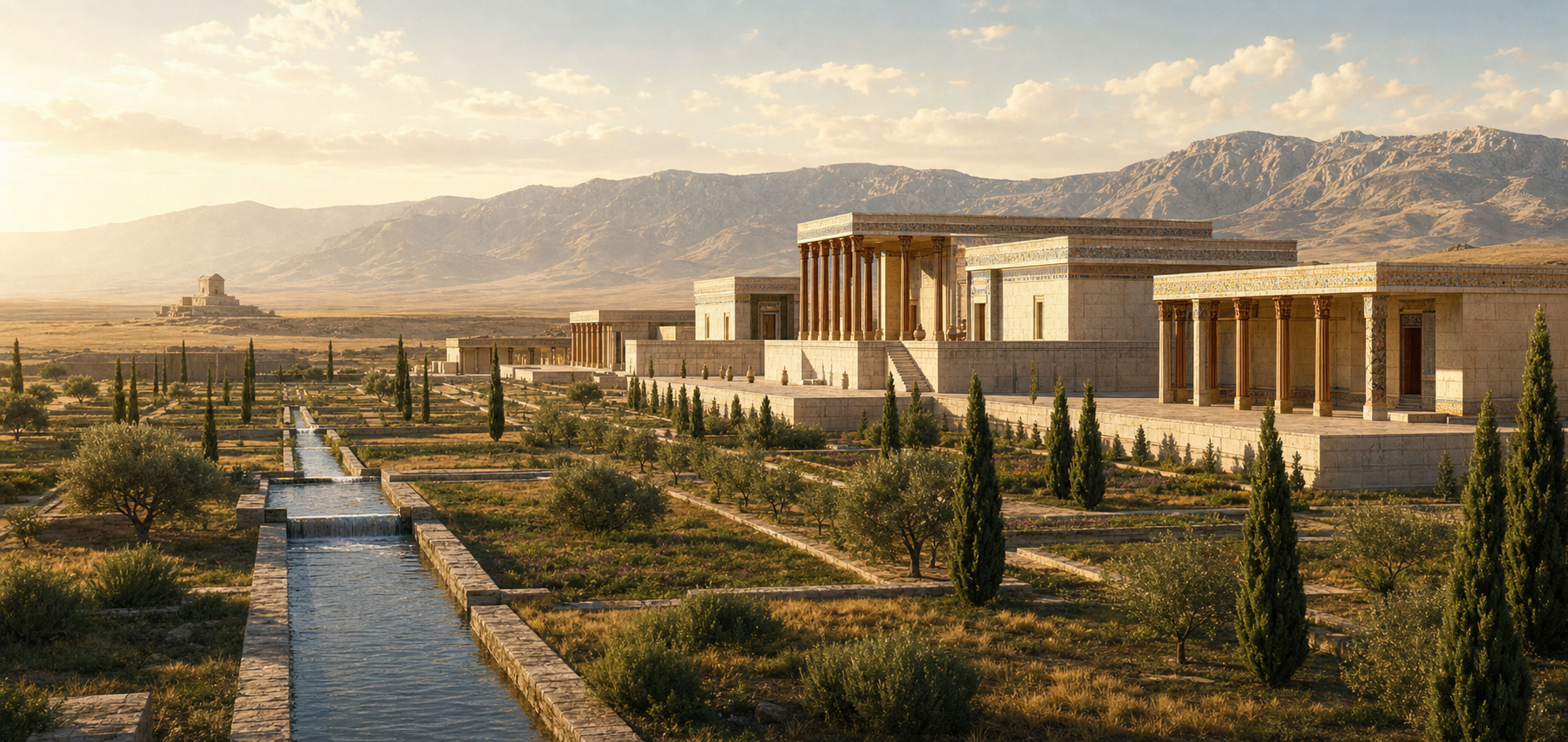
Ephesus was one of the most important and magnificent cities of the ancient Mediterranean world. Situated on the western coast of Asia Minor, near the mouth of the Cayster River, Ephesus occupied a strategic position that made it a centre of trade, religion, politics, and culture for many centuries. From its early Greek foundations to its prominence under Roman rule, Ephesus developed into a cosmopolitan metropolis whose monuments and legacy continue to command admiration.
Although it was originally a Greek city within the Ionian sphere, Ephesus became a meeting point between Greek and Anatolian traditions. Its religious significance, particularly as the home of the great Temple of Artemis, elevated it to international renown.
Geographic Setting and Strategic Importance
Ephesus lay along the Aegean coast of Asia Minor, benefiting from access to both inland routes and maritime trade networks. In antiquity, the city possessed a harbour that connected it directly to the Aegean Sea, making it a vital commercial hub.
The fertile plains surrounding the city supported agriculture, while its position near important land routes facilitated communication between the interior of Anatolia and the coast. This combination of advantages contributed to Ephesus’ long-term prosperity.
Early History and Ionian Foundations
The region around Ephesus had been inhabited since prehistoric times. In the early first millennium BCE, Greek settlers established the city as part of the Ionian migration to Asia Minor. As one of the twelve cities of the Ionian League, Ephesus shared religious and cultural ties with neighbouring Ionian communities.
During the Archaic period, Ephesus grew in wealth and importance. Its political life evolved in response to both internal developments and external pressures, including Persian expansion in the sixth century BCE.
The Temple of Artemis
Ephesus achieved enduring fame as the site of the Temple of Artemis, one of the most celebrated monuments of the ancient world. Dedicated to Artemis, the goddess associated with fertility, wilderness, and protection, the temple was among the largest and most impressive religious structures ever constructed in Greece.
The temple attracted pilgrims from across the Mediterranean. Its scale and splendour symbolised both religious devotion and civic pride. Although the structure was destroyed and rebuilt more than once, its reputation endured, and it was later counted among the Seven Wonders of the ancient world.
The cult of Artemis at Ephesus possessed distinctive features that reflected both Greek and local Anatolian traditions, illustrating the cultural blending characteristic of the region.
Ephesus under Persian and Hellenistic Rule
In the sixth century BCE, Ephesus fell under Persian control along with other Ionian cities. Although local governance continued, Persian authority shaped the political landscape.
After the conquests of Alexander the Great in the fourth century BCE, Ephesus entered the Hellenistic period. Control of the city passed between rival successor kingdoms. During this era, Ephesus was relocated slightly inland and redesigned according to advanced urban planning principles.
The Hellenistic city featured broad streets, public buildings, theatres, and markets. Its development reflected both strategic planning and architectural ambition.
Roman Ephesus
Ephesus reached the height of its splendour under Roman rule. Incorporated into the Roman province of Asia, it became one of the largest cities in the eastern Mediterranean. Roman administration enhanced its infrastructure and reinforced its commercial significance.
Monumental structures such as the Library of Celsus, the Great Theatre, and extensive bath complexes illustrate the city’s prosperity. The Great Theatre, capable of accommodating thousands of spectators, served as a centre for public gatherings and performances.
Ephesus became a focal point of trade and governance in Roman Asia. Its streets were lined with shops, colonnades, and public monuments that reflected wealth and civic pride.
Religion and Cultural Diversity
Religious life in Ephesus was rich and diverse. While the cult of Artemis remained central, other Greek and Roman deities were worshipped as well. The city’s cosmopolitan character encouraged the coexistence of multiple religious traditions.
In the Roman period, Ephesus also became an important centre of early Christianity. The apostle Paul is traditionally associated with the city, and Christian communities developed there in the first century CE. This later religious transformation added another dimension to Ephesus’ historical significance.
Economy and Society
The economy of Ephesus was driven by trade, agriculture, craftsmanship, and pilgrimage. Merchants from across the Mediterranean conducted business in its markets. Agricultural produce from the surrounding plains sustained the urban population.
Society in Ephesus included merchants, artisans, sailors, farmers, and administrators. As in other ancient cities, slavery formed part of the economic system. The diversity of occupations and ethnic backgrounds reflected the city’s status as an international centre.
Decline and Legacy
Over time, silting of the harbour gradually reduced Ephesus’ access to the sea, undermining its commercial vitality. Political instability in the later Roman Empire further weakened the city. By the Byzantine period, its prominence had significantly diminished.
Despite its decline, Ephesus’ archaeological remains preserve evidence of its former grandeur. The Temple of Artemis, though no longer standing in its full glory, remains a symbol of ancient architectural ambition. The Library of Celsus and the theatre continue to illustrate Roman urban sophistication.
Conclusion
Ephesus was a city of extraordinary significance, combining religious prestige, commercial prosperity, and architectural magnificence. From its Ionian origins and Persian subjection to its Hellenistic reorganisation and Roman splendour, the city exemplified the dynamic interplay of cultures in the eastern Mediterranean.
Its role as the home of the Temple of Artemis secured its place among the most celebrated cities of antiquity. Later, its importance within Roman administration and early Christianity extended its historical reach. Ephesus stands as a testament to the enduring vitality of ancient urban civilisation and remains one of the most remarkable sites of the classical world.