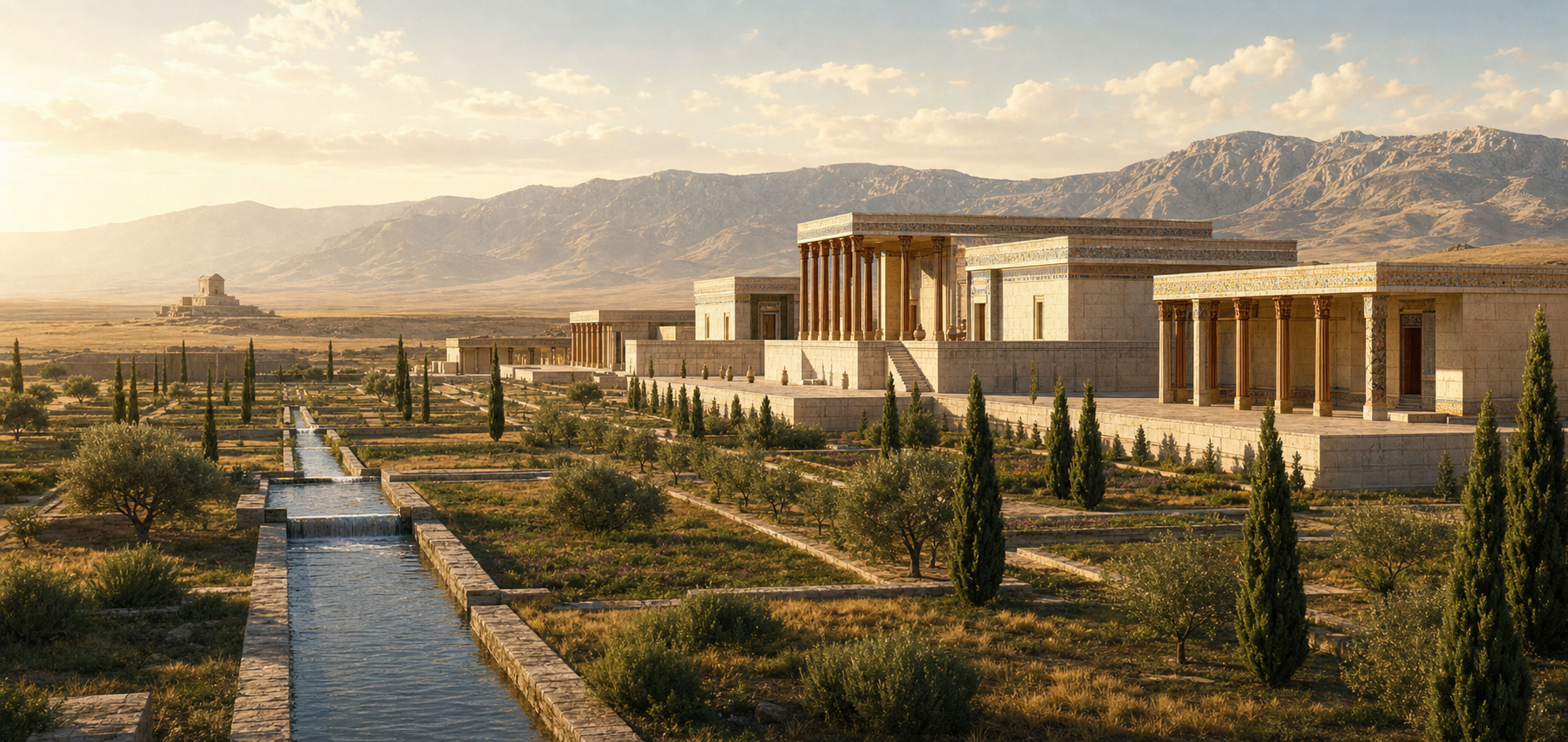
Smyrna was one of the most important and long-lived cities of the ancient Greek world, located on the western coast of Asia Minor along the Aegean Sea. Occupying a sheltered harbour at the head of a deep gulf, Smyrna combined maritime strength, commercial vitality, and cultural richness. Throughout antiquity it passed through periods of prosperity, destruction, and renewal, ultimately becoming one of the leading urban centres of the eastern Mediterranean under Roman rule.
Known today as Izmir, Smyrna’s ancient history reflects the dynamic interaction between Greek settlers, Anatolian communities, Persian authority, Hellenistic kingdoms, and Roman administration. Its strategic position and enduring resilience ensured that it remained significant for many centuries.
Geographic Setting and Strategic Importance
Smyrna lay along a naturally protected harbour, which offered safe anchorage for ships and direct access to inland trade routes. The fertile hinterland of western Anatolia supported agriculture, while the sea provided opportunities for commerce and naval activity.
The city’s position along major maritime routes linking mainland Greece, the islands of the Aegean, and the Near East allowed it to develop into a thriving commercial hub. Control of the harbour was central to Smyrna’s prosperity and strategic value.
Early History and Aeolian Origins
The earliest Greek settlement at Smyrna dates to the early first millennium BCE. It was initially founded by Aeolian Greeks and later came under Ionian influence. As part of the wider Ionian cultural sphere, Smyrna participated in the shared religious and linguistic traditions of the coastal Greek cities of Asia Minor.
During the Archaic period, Smyrna flourished as a trading centre. Archaeological evidence reveals fortifications, houses, and public spaces that indicate organised urban life. However, in the late sixth century BCE, the city was destroyed, likely during conflicts associated with the expansion of the Persian Empire.
For a period, Smyrna ceased to function as a major polis, but its advantageous location would eventually lead to its rebirth.
Hellenistic Refoundation
In the fourth century BCE, after the conquests of Alexander the Great, Smyrna was re-established as a planned Hellenistic city. According to tradition, Alexander himself chose the site for the new settlement, though its development was carried forward by his successors.
The Hellenistic Smyrna was carefully designed with broad streets, public squares, and defensive walls. Its urban layout reflected advances in city planning characteristic of the period. The refounded city quickly regained prosperity and importance.
This renewal marked a new chapter in Smyrna’s history, allowing it to become a prominent centre once more.
Roman Smyrna
Smyrna reached its greatest splendour under Roman rule. Incorporated into the Roman province of Asia, the city became one of the leading metropolises of the eastern Mediterranean. Roman patronage brought monumental construction, including temples, theatres, bath complexes, and colonnaded streets.
The city gained a reputation for loyalty to Rome and was granted privileges in return. Public buildings demonstrated both wealth and civic pride. Smyrna’s agora and theatre exemplified Roman architectural grandeur.
Under the empire, Smyrna thrived as a centre of trade, education, and administration. Its population grew, and its harbour remained active in Mediterranean commerce.
Religion and Cultural Life
Religious life in Smyrna was diverse and dynamic. Traditional Greek deities were worshipped in temples and sanctuaries throughout the city. During the Roman period, the imperial cult became particularly significant, and Smyrna was among the first cities to establish a temple dedicated to the worship of the Roman emperor.
The city also became an early centre of Christianity. It is mentioned in the Book of Revelation as one of the Seven Churches of Asia. Christian communities developed alongside established pagan traditions, reflecting the religious complexity of late antiquity.
Smyrna’s intellectual life flourished as well. It became known for its schools of rhetoric and philosophy, attracting students from across the region.
Economy and Society
The economy of Smyrna was driven by maritime trade, agriculture, and craftsmanship. Its harbour connected it to markets throughout the Mediterranean. Agricultural produce from the surrounding plains sustained the population and contributed to exports.
Society in Smyrna was cosmopolitan, comprising Greeks, Anatolians, Romans, and other groups. Merchants, artisans, sailors, administrators, and scholars formed a vibrant urban community. As in other ancient cities, slavery was present and contributed to economic production.
Resilience and Continuity
Smyrna endured earthquakes, invasions, and political transitions, yet repeatedly recovered. Its strategic location and strong civic identity allowed it to adapt to changing circumstances. Even as empires rose and fell, Smyrna maintained continuity as an urban centre.
In late antiquity and the Byzantine period, the city continued to be inhabited, though its fortunes fluctuated. Its ancient foundations, however, remained visible reminders of its classical past.
Legacy
Smyrna’s legacy rests upon its longevity, resilience, and cultural vitality. From its Aeolian origins and Ionian influence to its Hellenistic refoundation and Roman splendour, the city exemplified the adaptability of Greek urban civilisation.
Its harbour, monuments, and intellectual traditions secured a prominent place in the history of Asia Minor. The city’s mention in early Christian texts further extended its historical significance beyond the classical world.
Conclusion
Smyrna was a city shaped by geography, commerce, and cultural exchange. Its sheltered harbour and fertile hinterland supported economic prosperity, while its strategic position ensured political importance. Through destruction and renewal, Smyrna demonstrated remarkable resilience.
As a centre of trade, religion, and learning, Smyrna stands among the most enduring cities of antiquity. Its history illustrates the richness and complexity of the ancient Greek and Roman world in Asia Minor, and its legacy continues to inform modern understanding of Mediterranean civilisation.