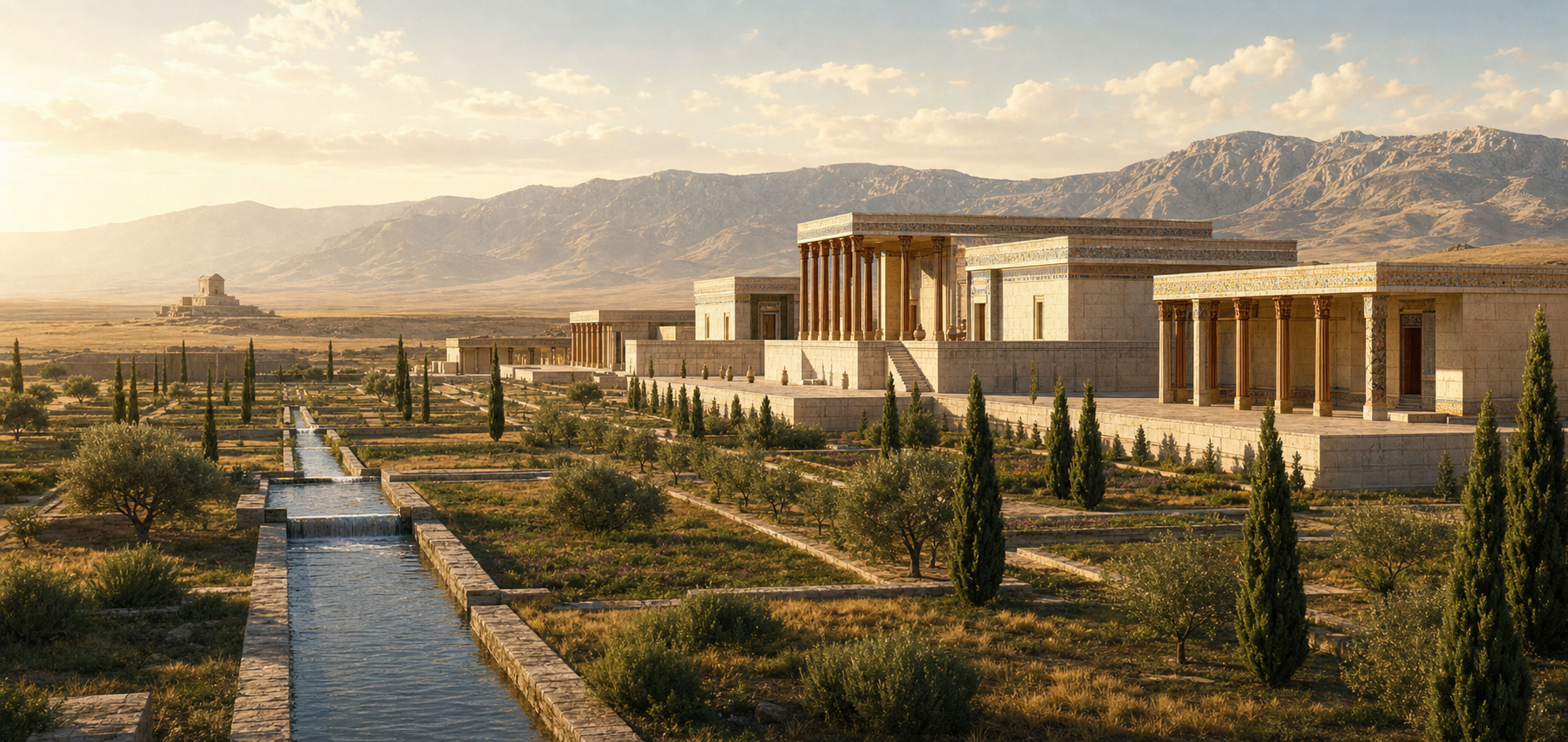
Syracuse was one of the greatest and most powerful cities of the ancient Greek world, located on the south-eastern coast of Sicily. Founded as a Greek colony in the eighth century BCE, it grew into a formidable military, political, and cultural centre whose influence extended across the western Mediterranean. At various points in its history, Syracuse rivalled the leading mainland poleis in wealth and power, and it played a decisive role in the conflicts between Greek and Carthaginian forces in Sicily.
Its strategic harbour, fertile hinterland, and ambitious rulers enabled Syracuse to become the dominant Greek city in Sicily. The city’s history is marked by military triumphs, periods of tyranny and reform, cultural achievement, and eventual incorporation into the Roman Republic.
Geographic Setting and Strategic Importance
Syracuse occupied a highly advantageous position along the Ionian Sea. Its harbour was one of the finest natural harbours in the Mediterranean, offering protection for fleets and facilitating maritime trade. The city was originally centred on the small island of Ortygia, which provided strong natural defences, before expanding onto the mainland.
The surrounding plains of south-eastern Sicily were exceptionally fertile, supporting agriculture on a large scale. Grain production in particular contributed significantly to the city’s wealth and importance. Control of both sea and land routes allowed Syracuse to project power throughout Sicily and beyond.
Foundation and Early Development
Syracuse was founded by settlers from Corinth in the eighth century BCE. As a Corinthian colony, it retained cultural and religious ties to its mother city while developing its own institutions and identity.
During the Archaic period, Syracuse expanded rapidly, establishing control over neighbouring territories and subjugating indigenous communities. Its growth brought both prosperity and internal political tensions, including struggles between aristocratic elites and emerging tyrants.
By the sixth century BCE, Syracuse had become one of the most prominent Greek cities in the western Mediterranean.
The Rise of Tyrants and Military Power
In the fifth century BCE, Syracuse came under the rule of powerful tyrants, most notably Gelon and later Dionysius I. Gelon strengthened the city’s military capabilities and achieved a decisive victory against Carthaginian forces at the Battle of Himera. This victory secured Greek dominance in eastern Sicily and elevated Syracuse’s status.
Dionysius I further expanded Syracuse’s power, constructing formidable fortifications and building a strong navy. Under his rule, the city became the leading Greek power in Sicily and a major force in the western Mediterranean.
Although tyranny brought stability and military success, it also generated political tension and periodic unrest.
The Athenian Expedition
One of the most famous episodes in Syracuse’s history occurred during the Peloponnesian War. In the late fifth century BCE, Athens launched a massive naval expedition to conquer Syracuse. The campaign ended in disaster for Athens. After a prolonged siege and intense fighting, the Athenian forces were decisively defeated.
The failure of the Sicilian Expedition marked a turning point in the Peloponnesian War, severely weakening Athens. Syracuse’s successful defence demonstrated its military strength and strategic resilience.
Cultural and Intellectual Life
Syracuse was not only a military power but also a centre of cultural achievement. The city attracted philosophers, poets, and artists. Plato visited Syracuse, seeking to influence its rulers with philosophical ideas, though his efforts met with limited success.
The mathematician Archimedes, one of the most celebrated scientists of antiquity, was born in Syracuse. His innovations in geometry, mechanics, and engineering had a profound impact on ancient science. During the Roman siege of the city, Archimedes reportedly devised defensive machines that delayed the Roman advance.
The city’s theatres, temples, and public buildings reflected its wealth and cultural vitality.
Conflict with Carthage
Syracuse was frequently engaged in conflict with Carthage, the major Phoenician power in the western Mediterranean. Control of Sicily was contested for centuries. While neither side achieved permanent dominance over the entire island, Syracuse remained the strongest Greek city in Sicily.
These conflicts shaped the political and military development of the city and reinforced its role as a defender of Greek interests in the west.
Roman Conquest
In the third century BCE, during the Second Punic War, Syracuse became entangled in the struggle between Rome and Carthage. After initially maintaining independence, the city ultimately fell to Roman forces following a prolonged siege.
The Roman conquest marked the end of Syracuse’s independence. Despite the valiant defence, including the efforts of Archimedes, the city was captured and incorporated into the Roman Republic.
Under Roman rule, Syracuse remained an important administrative and commercial centre, though it no longer exercised the political dominance of earlier centuries.
Religion and Civic Identity
Religious life in Syracuse followed the traditions of Greek polytheism. Temples dedicated to Athena and Apollo were prominent features of the city’s sacred landscape. Religious festivals reinforced civic unity and celebrated divine protection.
Over time, Roman religious practices and later Christianity became part of the city’s cultural fabric, reflecting broader historical transitions.
Economy and Society
Syracuse’s economy was based on agriculture, maritime trade, and craftsmanship. The fertile plains of Sicily ensured abundant grain production, while the harbour facilitated commerce across the Mediterranean.
Society in Syracuse included citizens, resident foreigners, labourers, and slaves. Political structures evolved over time, shifting between tyranny, oligarchy, and more participatory forms of governance.
The city’s wealth and strategic importance attracted migrants and fostered a diverse population.
Legacy
Syracuse stands as one of the most powerful and influential Greek cities of the western Mediterranean. Its victories against Carthage, its defeat of the Athenian expedition, and its association with figures such as Archimedes ensured its lasting fame.
The city’s archaeological remains, including its theatre and fortifications, testify to its former grandeur. Its history illustrates the reach of Greek civilisation beyond the mainland and the dynamic interaction between Greek, Carthaginian, and Roman powers.
Conclusion
Syracuse was a city of exceptional ambition and resilience. Founded as a Corinthian colony, it rose to become the dominant Greek power in Sicily and a formidable force in Mediterranean politics. Through military strength, cultural achievement, and strategic advantage, Syracuse secured a place among the great cities of antiquity.
Though eventually absorbed into the Roman world, its influence endured through its scientific contributions, architectural monuments, and historical legacy. Syracuse remains a symbol of the vitality and reach of ancient Greek civilisation in the western Mediterranean.