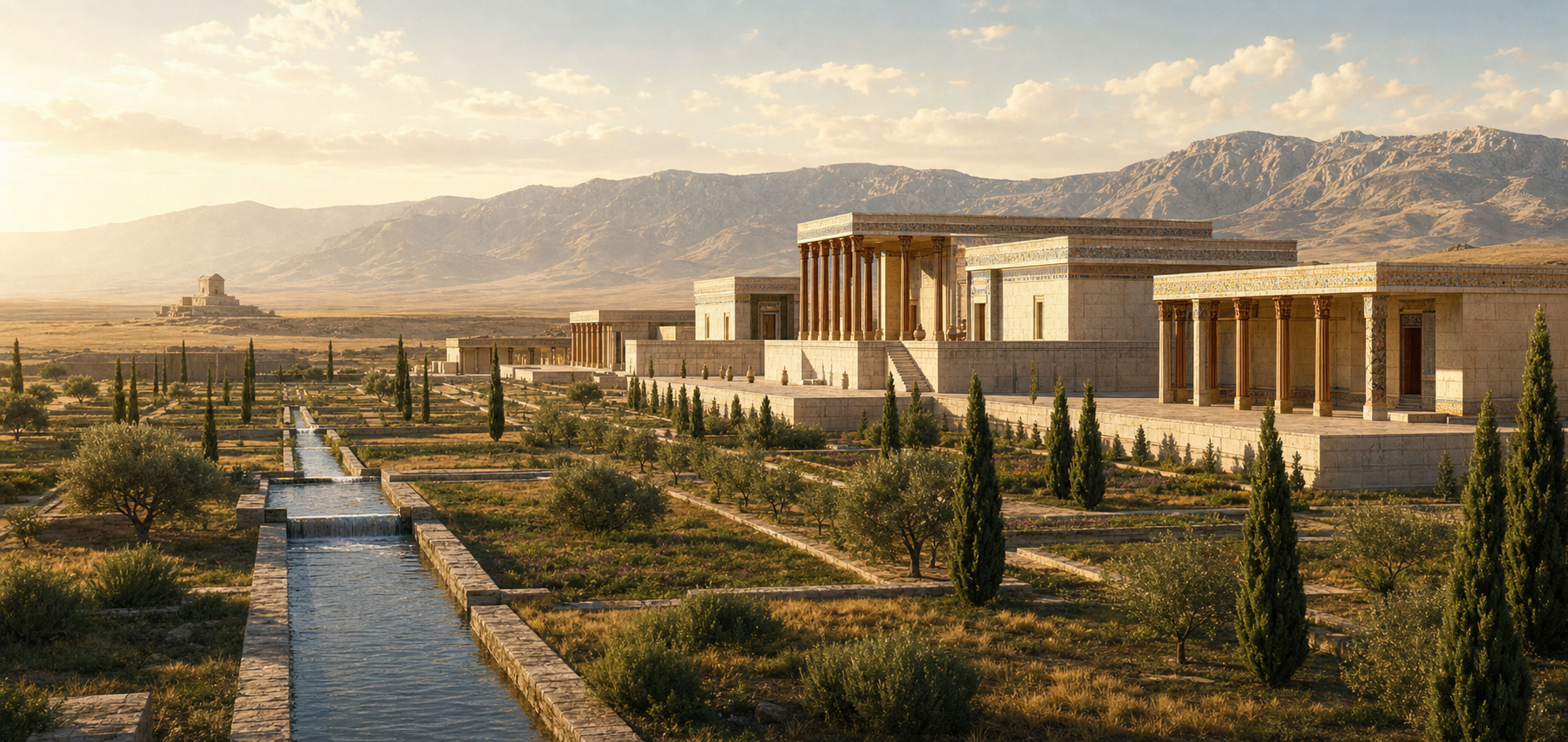
Thessaly was a vast and fertile region of northern Greece, renowned in antiquity for its broad plains, powerful aristocratic families, and exceptional cavalry. Unlike many parts of southern Greece characterised by mountainous terrain and fragmented city-states, Thessaly possessed extensive lowlands that supported large-scale agriculture and horse breeding. Throughout Greek history, the region played a significant military and political role, at times exerting influence beyond its borders and at other times falling under the control of more centralised powers.
Although Thessaly never developed a dominant polis comparable to Athens or Sparta, its strategic location and economic strength ensured its importance within the wider Greek world.
Geographic Setting and Natural Landscape
Thessaly was bordered by Macedonia to the north, Epirus to the west, central Greece to the south, and the Aegean Sea to the east. Mountain ranges, including Mount Olympus and the Pindus Mountains, encircled the region, forming a natural basin.
Within this enclosure lay the fertile Thessalian plain, one of the richest agricultural areas in Greece. Abundant rivers and arable land supported grain cultivation and livestock farming. The plains were especially suited to horse breeding, and Thessalian cavalry became famous throughout the Greek world.
The region’s geography provided both agricultural prosperity and defensive security, shaping its economic and political development.
Early History and Tribal Organisation
In early antiquity, Thessaly was inhabited by various tribes and clans. Over time, these groups formed a loose confederation under aristocratic leadership. Political authority often rested with powerful noble families who controlled large estates and commanded local followings.
Unlike the polis-centred structure of southern Greece, Thessaly developed a regional identity organised around tribal divisions and aristocratic rule. The Aleuadae of Larissa were among the most prominent ruling families, exercising influence across the region.
Political Structure and the Thessalian League
Thessaly occasionally operated under a federal arrangement known as the Thessalian League. In times of crisis, a military leader known as the tagus could be appointed to command the united forces of the region. This role was typically granted to a member of a leading aristocratic house.
The loose nature of this confederation meant that unity was often temporary. Rivalries between noble families limited the emergence of a strong, centralised state. Nevertheless, when united, Thessaly could project considerable military power.
Military Reputation and Cavalry
Thessaly’s greatest military distinction lay in its cavalry. The fertile plains allowed for extensive horse breeding, and Thessalian horsemen were widely respected for their skill and effectiveness. In many Greek conflicts, Thessalian cavalry served as valuable allies.
During the Persian Wars, Thessaly initially submitted to Persian authority but later aligned with the Greek cause. In subsequent conflicts, including the Peloponnesian War, Thessaly’s alliances shifted according to political circumstances.
The reputation of Thessalian cavalry endured into the Hellenistic period and played a role in Macedonian military campaigns.
Mythology and Cultural Identity
Thessaly held an important place in Greek mythology. It was associated with legendary figures such as Jason and the Argonauts, whose voyage was said to have begun in Iolcus. The region was also linked to Achilles, who was raised in Phthia in southern Thessaly.
Mount Olympus, located on the border of Thessaly and Macedonia, was regarded as the dwelling place of the gods. This association enhanced the region’s symbolic significance within Greek religious imagination.
Despite its mythological prominence, Thessaly was sometimes portrayed by southern Greeks as rustic or aristocratic in contrast to the urban sophistication of Athens.
Thessaly and Macedonian Expansion
In the fourth century BCE, Thessaly became increasingly involved in the politics of Macedon. Philip II of Macedon intervened in Thessalian affairs and secured control over the region. By incorporating Thessaly into his sphere of influence, Philip gained access to its cavalry and resources.
Under Macedonian dominance, Thessaly contributed significantly to military campaigns, including those led by Alexander the Great. Although political independence was reduced, the region remained economically productive.
Roman Period
Following the Roman conquest of Macedonia and Greece in the second century BCE, Thessaly was incorporated into the Roman provincial system. Its agricultural wealth continued to sustain local communities, though political autonomy was limited.
Roman administration maintained existing structures while integrating the region into imperial governance. Thessaly’s plains remained important for grain production and livestock.
Economy and Society
The economy of Thessaly was based primarily on agriculture and pastoralism. Large estates controlled by aristocratic families produced grain and supported herds of cattle and horses. The social structure reflected this economic base, with powerful landowners exercising considerable authority.
Dependent labourers and enslaved individuals worked on estates, contributing to agricultural output. The concentration of landownership reinforced aristocratic dominance within the region.
Legacy
Thessaly’s legacy lies in its distinctive social and political organisation, its military reputation, and its mythological associations. As a land of fertile plains and noble cavalry, it differed from the mountainous and city-centred regions of southern Greece.
Its incorporation into Macedonian and later Roman systems illustrates the shifting balance of power in the ancient Greek world. Yet its economic and cultural contributions remained significant.
Conclusion
Thessaly was a region defined by geography, aristocratic tradition, and military excellence. Its fertile plains supported prosperity, while its cavalry earned renown across Greece. Though it lacked the urban political structures of Athens or Sparta, it played a vital role in regional and international affairs.
From its mythological associations with heroes and gods to its integration into larger empires, Thessaly stands as an essential part of ancient Greek history. Its distinctive character enriches our understanding of the diversity within the Hellenic world.