
Heavy infantry
Greek Hoplites
Citizen soldiers fought shoulder to shoulder with large shields and thrusting spears in the dense phalanx.
Explore tradition →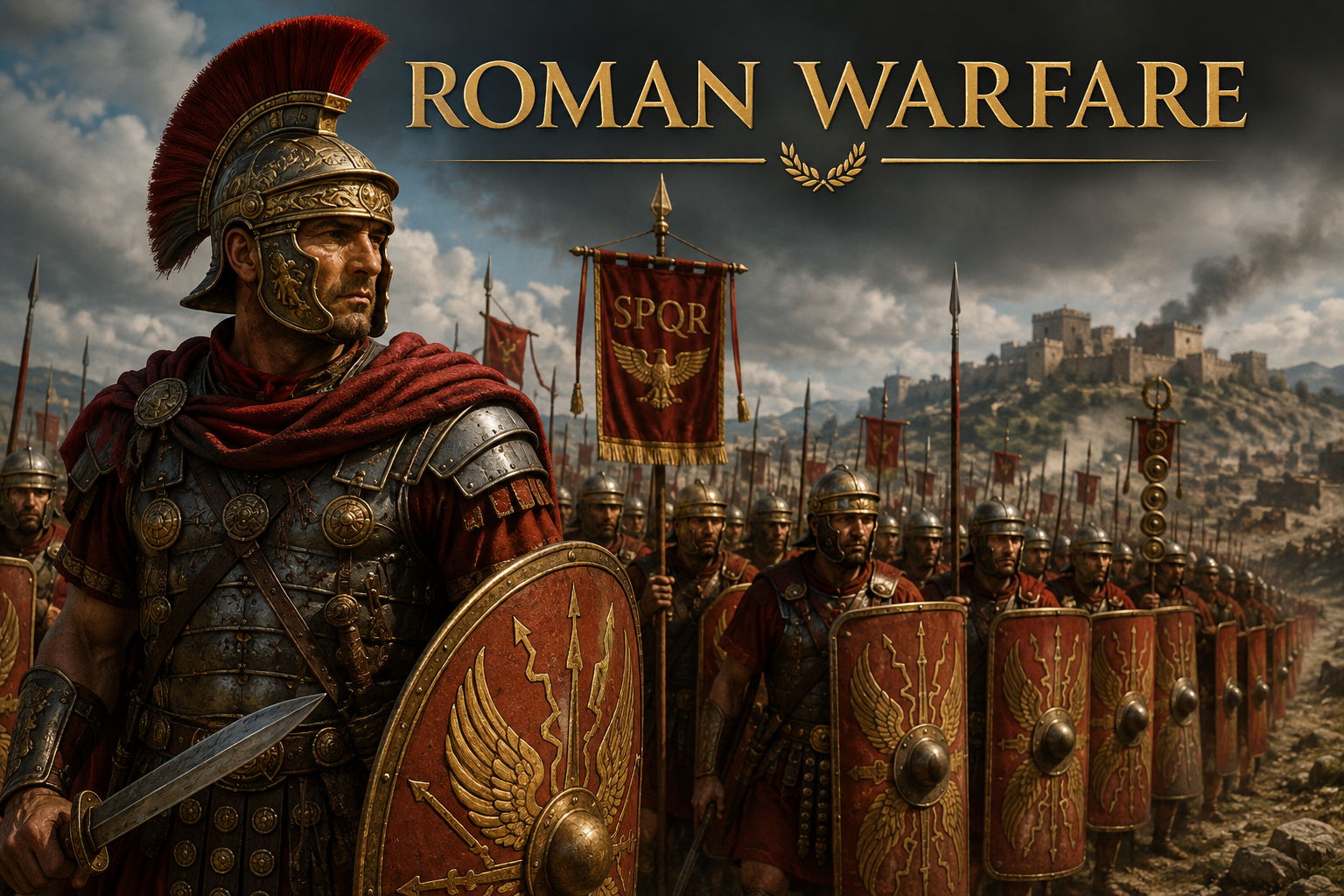
From shield walls and chariot charges to sieges and naval battles, explore how ancient societies organised violence and built empires.
Organisation, discipline, logistics and political purpose mattered as much as courage on the battlefield.
Citizen soldiers fought shoulder to shoulder with large shields and thrusting spears in the dense phalanx.
Explore tradition →
The elite royal guard formed part of an army drawing infantry, cavalry and specialists from across the empire.
Explore tradition →
Flexible formations, engineering skill, fortified camps and relentless training made the legion a durable instrument of conquest.
Explore tradition →
Chariots, archers and infantry formed the backbone of Egypt’s military power, defending the Nile Valley and projecting force abroad.
Explore tradition →Egyptian and Hittite armies clash in Syria in one of the best-documented chariot battles of the Bronze Age.
An Athenian-led army defeats a Persian expeditionary force on the plain of Marathon.
Alexander defeats Darius III in a battle that opens the heartlands of the Persian Empire.
Hannibal surrounds and destroys a much larger Roman army in a masterpiece of battlefield manoeuvre.
Octavian’s naval victory ends the struggle for control of the Roman world.
Simple, adaptable and deadly, edged and pointed weapons dominated ancient battlefields.
Protection reflected technology, wealth, fighting style and the tactical needs of each army.
Ramps, towers, mines, artillery and blockade turned fortified cities into battlefields of engineering.
Roads, animals, ships, grain and disciplined marching determined how far armies could operate.