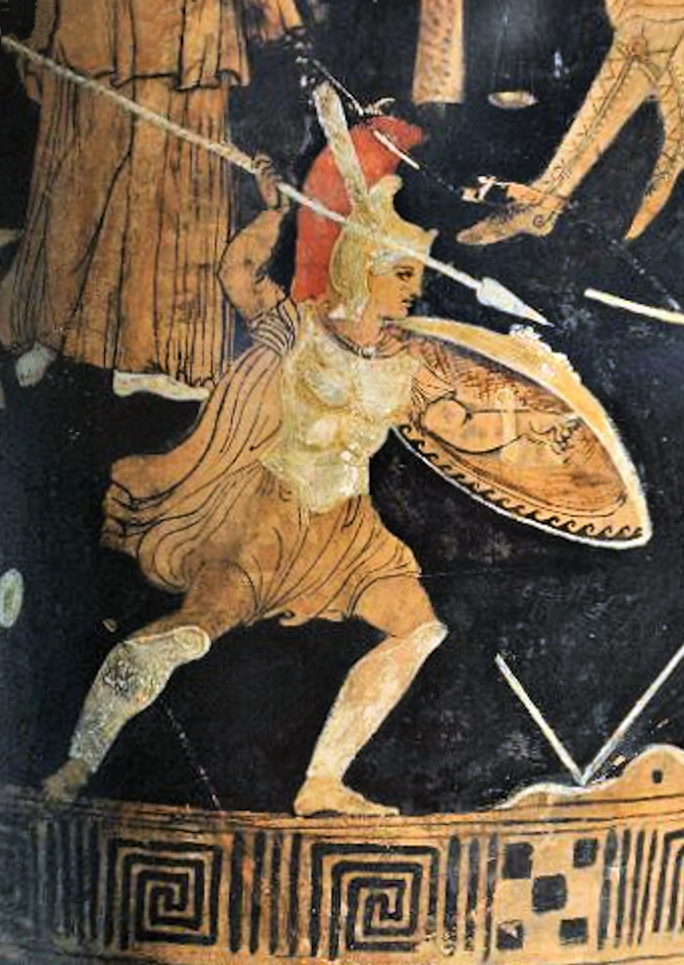
For more than three thousand years, the fall of Troy has occupied a unique place between mythology, literature and history. It is a story of love and betrayal, courage and cruelty, heroic ambition and human suffering. At its centre stands a magnificent fortified city destroyed after a ten-year war through one of the most famous acts of deception ever imagined: the Trojan Horse.
Introduction
The tale is usually associated with Homer’s Iliad, but the poem does not actually describe the wooden horse or the destruction of Troy. The Iliad concentrates on a brief period during the final year of the war and ends with the funeral of the Trojan prince Hector.
The later stages of the conflict survive through other Greek traditions, fragments of lost epic poems, ancient drama, visual art and Roman literature, particularly Virgil’s Aeneid.
Behind the legend lies a real archaeological site at Hisarlik in north-western Turkey. This settlement was occupied, destroyed and rebuilt many times across thousands of years.
Whether the city experienced a war exactly like the one remembered in Greek mythology remains uncertain, but archaeology demonstrates that Troy was neither an imaginary place nor an insignificant settlement. It stood at a meeting point between Anatolia, the Aegean and the Balkans and became one of the most culturally important cities of the ancient world.
Troy: The City at the Gateway of Two Worlds
Ancient Troy stood near the entrance to the Dardanelles, the narrow waterway connecting the Aegean Sea with the Sea of Marmara and, beyond it, the Black Sea. Its location placed it close to maritime and overland routes linking the civilisations of the eastern Mediterranean.
The city was known by several names. Homer called it both Troy and Ilios; later Greeks referred to it as Ilion, while the Romans called it Ilium.
The modern archaeological site occupies the mound of Hisarlik, close to the present-day village of Tevfikiye in Turkey.
Troy was not a single city constructed at one moment. It was a succession of settlements built one above another. When buildings were destroyed or abandoned, later inhabitants levelled the remains and constructed new houses, streets, palaces and walls on top.
Archaeologists have therefore uncovered numerous occupation layers, conventionally numbered Troy I through Troy IX, with further subdivisions within them.
The most likely settings for any conflict that inspired the Trojan War tradition are the Late Bronze Age settlements known as Troy VI and Troy VIIa.
Troy VI possessed massive sloping stone walls, towers, substantial buildings and a fortified citadel. It was an impressive Anatolian city with strong connections to the wider Aegean world.
To the Greeks who later told its story, however, Troy was more than a strategically placed city. It was the wealthy kingdom of Priam, a place of broad streets, towering gates, temples and royal palaces.
Its walls were said to have been built with the assistance of the gods Apollo and Poseidon, making them almost impossible to capture by direct assault.
The Judgement of Paris
In Greek mythology, the chain of events leading to Troy’s destruction began not on a battlefield but at a wedding.
The sea goddess Thetis was married to the mortal hero Peleus. Almost all the gods were invited to the celebration, but Eris, the goddess of discord, was excluded.
Angered by the insult, she appeared at the feast and threw among the guests a golden apple bearing a message declaring that it belonged to the most beautiful goddess.
Three goddesses claimed it: Hera, queen of the gods; Athena, goddess of wisdom and warfare; and Aphrodite, goddess of love and beauty.
Zeus refused to decide between them and ordered that the judgement should be made by Paris, a prince of Troy.
Each goddess attempted to influence Paris. Hera offered political power and kingship. Athena promised wisdom and military glory. Aphrodite offered him the love of the most beautiful woman in the world.
Paris chose Aphrodite, placing personal desire above power, wisdom and the safety of his kingdom.
The woman promised to him was Helen, daughter of Zeus and wife of Menelaus, king of Sparta. Depending on the ancient version, Helen either fell in love with Paris and left willingly or was abducted and carried away.
Paris returned with her to Troy, where King Priam and the royal family faced the consequences of his actions.
Helen’s departure was not merely a private scandal. Before she had married Menelaus, many Greek princes had sought her hand. Her father had required them to swear an oath that they would defend whichever man she chose against anyone who attempted to take her away.
Menelaus therefore appealed to the former suitors and demanded their assistance. The private dispute between two households became the cause of a vast expedition against Troy.
The Trojan War tradition consequently begins with desire, but it quickly grows into a struggle involving honour, promises, political power and revenge.
The Greek Expedition
The Greek coalition was commanded by Agamemnon, king of Mycenae and elder brother of Menelaus.
Among the warriors who joined him were some of the greatest figures of Greek mythology:
Principal Greek heroes
- Achilles, the almost invincible warrior and leader of the Myrmidons.
- Odysseus, king of Ithaca, renowned for intelligence and cunning.
- Ajax the Great, famous for his immense size and strength.
- Diomedes, one of the fiercest Greek fighters.
- Nestor, the elderly king of Pylos and adviser to the army.
- Patroclus, Achilles’ closest companion.
Mycenae was a major centre of the civilisation that dominated much of mainland Greece between approximately 1600 and 1100 BC.
The term “Mycenaean” is now used for this Late Bronze Age culture, whose fortified palaces, weapons, artwork and administrative records provide a plausible historical background for the Greek forces imagined in the Trojan War.
According to myth, the Greek fleet assembled at Aulis. Even before it sailed, the expedition was marked by conflict and sacrifice.
Agamemnon offended the goddess Artemis, who prevented the winds from carrying the fleet towards Troy. The seer Calchas declared that the king must sacrifice his daughter Iphigenia.
Ancient writers offered different endings to this episode. In some versions, Iphigenia was killed. In others, Artemis saved her at the final moment and replaced her with a deer.
Whatever the version, the story established an important theme: the war would demand terrible sacrifices not only from soldiers but from their families.
The fleet eventually crossed the Aegean and landed near Troy. The Greeks drew their ships onto the shore and established a fortified camp.
Yet the city’s defences resisted them. What might have been expected to become a swift campaign turned into a siege lasting ten years.
Ten Years of War
The surviving myths do not portray the Trojan War as a continuous attack against the city walls.
The Greeks fought battles on the surrounding plain, raided nearby settlements and attacked communities allied with Troy. The Trojans remained protected by their fortifications but repeatedly emerged to challenge the invaders.
The war was also influenced by the gods. Hera, Athena and Poseidon generally favoured the Greeks, while Aphrodite and Apollo frequently assisted the Trojans.
Zeus attempted to balance the competing divine interests, although even he was constrained by fate.
The Trojan army was led by Hector, eldest son of Priam and the city’s greatest defender.
Unlike many Greek heroes, Hector was not primarily motivated by the pursuit of individual fame. He fought because Troy, his family and his people depended upon him.
His farewell to his wife Andromache and their young son Astyanax became one of the most moving scenes in ancient literature.
Andromache begged him not to return to battle, knowing that he was Troy’s principal protection and fearing that his death would lead to the enslavement of his family.
Hector acknowledged the danger but believed that honour and duty required him to fight.
His tragedy lies in the fact that he clearly understands what Troy’s fall will mean. He imagines Andromache being led away as a captive and fears her suffering more than his own death.
Yet he cannot escape the role imposed upon him.
Achilles and the Death of Patroclus
The central action of Homer’s Iliad begins with a dispute between Achilles and Agamemnon.
Agamemnon was forced to return a captive woman named Chryseis after her father, a priest of Apollo, appealed for her release.
To compensate himself, Agamemnon seized Briseis, a captive woman who had been awarded to Achilles.
Achilles regarded this as an intolerable attack upon his honour. He withdrew from the fighting and refused to allow the Myrmidons to participate.
His absence transformed the course of the war. Without its greatest warrior, the Greek army was driven back towards its ships.
As the Trojans threatened the Greek camp, Patroclus begged Achilles to let him enter the battle wearing Achilles’ armour.
The sight of the familiar armour would, he hoped, convince the Trojans that Achilles had returned.
The plan initially succeeded. Patroclus pushed the Trojans away from the ships, but he continued pursuing them towards the city despite Achilles’ instructions.
Hector confronted and killed him, taking the armour from his body.
Patroclus’ death transformed Achilles’ anger. His dispute with Agamemnon suddenly appeared insignificant beside his grief.
Achilles returned to battle wearing new armour made by the divine craftsman Hephaestus.
He drove the Trojans back and finally met Hector outside the city walls. Hector briefly fled, running around Troy before turning to face his enemy.
Achilles killed him and, refusing to respect the body of his defeated opponent, attached it to his chariot and dragged it before the walls.
King Priam later entered the Greek camp alone and approached the man who had killed his son.
He kissed Achilles’ hands and begged him to remember his own elderly father. Priam’s grief reached Achilles, who returned Hector’s body so that the Trojans could perform the proper funeral rites.
The Iliad concludes not with Troy’s destruction, but with mourning and a temporary restoration of compassion between enemies.
The Death of Achilles
The war continued after Hector’s funeral. Troy received new allies, including the Amazon queen Penthesilea and Memnon, a powerful king from the east.
Achilles defeated both, but his own fate was approaching.
Paris eventually killed Achilles with an arrow. In many later versions Apollo guided the shot towards Achilles’ vulnerable heel.
The familiar story that Achilles’ mother had dipped him in the River Styx while holding him by the heel became especially influential in later tradition, although it is not part of Homer’s Iliad.
After Achilles’ death, Ajax and Odysseus competed to receive his armour. The Greeks awarded it to Odysseus.
Overcome by humiliation and madness, Ajax killed himself.
The Greek army had now lost Achilles, Patroclus and Ajax, while years of siege had failed to break Troy. Yet prophecies suggested that the city could still be captured if certain conditions were met.
The Greeks brought Achilles’ son Neoptolemus to the war. They also recovered the wounded archer Philoctetes, who possessed the bow of Heracles.
Philoctetes subsequently killed Paris.
Even the death of Paris did not end the conflict. Helen was given to another Trojan prince, Deiphobus, and remained inside the city.
Troy’s walls still stood, and the Greeks increasingly recognised that they could not win through strength alone.
They would have to rely upon deception.
The Plan of the Wooden Horse
The idea of the Trojan Horse was generally credited to Odysseus, although some traditions associated its construction with the craftsman Epeius and divine inspiration from Athena.
The Greeks built an enormous hollow wooden horse and selected a group of warriors to hide inside it.
Ancient accounts disagree over their exact number, but Odysseus, Menelaus and Neoptolemus were commonly included among them.
The remainder of the Greek army burned or dismantled parts of its camp, boarded the ships and sailed away from the visible coastline.
Rather than returning home, the fleet waited nearby, traditionally near the island of Tenedos.
When the Trojans emerged from the city the following morning, they found the Greek camp deserted. After ten years of suffering, it appeared that the siege was finally over.
Only the horse remained.
A Greek named Sinon deliberately allowed himself to be captured. He told the Trojans that the Greeks had abandoned him and that the horse was a sacred offering to Athena.
According to his story, it had been made so large that the Trojans could not bring it inside their city. Should they do so, however, Troy would receive divine protection.
The tale was designed to transform suspicion into ambition.
If the Trojans destroyed the horse, they might offend Athena. If they carried it into the city, they could claim the sacred protection that the Greeks had intended for themselves.
The Warnings of Laocoön and Cassandra
Not everyone believed Sinon.
Laocoön, a Trojan priest, warned his people against trusting anything left by the Greeks.
In one famous tradition, he threw a spear into the horse’s side. The weapon struck the hollow interior, but the hidden warriors remained silent.
Soon afterwards, enormous serpents emerged from the sea and killed Laocoön and his sons.
The Trojans interpreted the event as divine punishment for attacking Athena’s offering. Instead of confirming Laocoön’s warning, his death persuaded them that the horse must be sacred.
Cassandra, daughter of Priam, also recognised the danger.
Apollo had granted her the power to foresee the future but had cursed her so that no one would believe her prophecies.
She warned that the horse contained armed men and that bringing it inside would destroy Troy.
Once again, she was ignored.
The Trojans broke through part of their defences or widened the gateway and dragged the horse into the city.
They celebrated the apparent end of the war with feasting, music and religious ceremonies.
After a decade of constant fear, the population believed itself safe.
The very symbol of their defeat had already crossed the walls.
The Final Night
When darkness fell and the celebrations ended, Sinon signalled to the Greek fleet. The ships returned silently to the shore.
The warriors concealed within the horse emerged and killed the guards. They opened the city gates, allowing the returning Greek army to enter Troy.
The attack came while the Trojans were sleeping or disordered by celebration.
Fires spread through houses, temples and palaces. Soldiers fought in streets crowded with civilians.
The organisation that had allowed Troy to resist for ten years collapsed within hours.
Aeneas, one of the Trojan commanders, awoke to the sounds of battle and attempted to organise resistance.
In Virgil’s later Roman account, the ghost of Hector appeared to him and told him that the city could no longer be saved.
Aeneas’ duty was not to die in a hopeless defence but to rescue Troy’s sacred objects and preserve its people’s future.
Elsewhere, Priam armed himself despite his age. His wife Hecuba persuaded him to seek protection at a sacred altar.
There he witnessed the death of his son Polites before being killed by Neoptolemus, the son of Achilles.
The scene represented the complete destruction of the Trojan royal house.
Priam, who had once ruled a wealthy city and fathered many children, died beside an altar while his palace burned around him.
Menelaus reached the chambers of Deiphobus and recovered Helen.
Ancient accounts differ over the encounter. Some portray Menelaus as intending to kill her before her beauty weakened his anger. Others suggest that Helen assisted the Greeks during the final attack.
Her precise responsibility remained disputed even among ancient authors.
As the fires consumed the city, the surviving Trojan men were killed and many women were taken prisoner.
The fall of Troy was not presented simply as a glorious military victory. It was also a catastrophe involving massacre, enslavement and the destruction of families.
The Fate of the Women of Troy
The suffering of the Trojan women became one of the most powerful subjects in Greek tragedy.
Hecuba, once queen of Troy, was reduced to slavery. Andromache, Hector’s widow, was awarded to Neoptolemus.
Cassandra was seized by Ajax the Lesser and later taken by Agamemnon.
Polyxena, another daughter of Priam, was sacrificed at the tomb of Achilles in some traditions.
Astyanax, the young son of Hector and Andromache, was killed so that he could never grow up and avenge Troy. Some accounts say he was thrown from the city walls.
These stories stripped away the language of military honour and revealed the consequences of conquest for those who had not chosen the war.
Euripides’ tragedies, including The Trojan Women and Hecuba, later presented the Greek victory from the perspective of defeated women awaiting enslavement.
The victors themselves did not escape suffering. Greek traditions describe many commanders experiencing shipwreck, murder, exile or family disaster on their journeys home.
Agamemnon was killed after returning to Mycenae. Ajax the Lesser was destroyed at sea. Odysseus wandered for ten years before reaching Ithaca.
Victory at Troy therefore carried a moral cost. The Greeks captured the city, but their acts of brutality and sacrilege brought further violence upon them.
Aeneas and the Survival of Troy
Although the city was destroyed, Troy survived symbolically through Aeneas.
According to the tradition developed most fully in Virgil’s Aeneid, Aeneas escaped while carrying his elderly father Anchises upon his shoulders and leading his young son Ascanius.
His wife Creusa was lost during the flight.
Aeneas departed with a group of Trojan survivors and travelled across the Mediterranean.
After years of wandering, he reached Italy, where his descendants were believed to have established the line that eventually produced Romulus and Remus, the legendary founders of Rome.
This tradition allowed the Romans to present themselves as heirs to Troy.
Rome was not merely another foreign power fascinated by the Greek story. It could claim to represent Troy reborn: the civilisation founded by refugees who survived the Greek destruction.
The image of Aeneas carrying Anchises became a popular symbol of duty towards family, gods and homeland.
What Archaeology Reveals
For centuries, many Europeans treated Troy as a purely legendary place. In the nineteenth century, attention increasingly focused on Hisarlik.
Frank Calvert, a British expatriate who owned part of the mound, conducted early investigations and believed it contained the remains of Troy.
Heinrich Schliemann later began large-scale excavation there in 1870.
Schliemann became famous for announcing that he had found the city of Priam, although his methods were destructive and his interpretations were frequently incorrect.
His enormous trench cut through later archaeological levels as he searched for what he believed to be Homeric Troy.
Schliemann discovered a collection of gold and other objects that he called “Priam’s Treasure”.
However, the objects came from Troy II, a settlement approximately a thousand years older than the likely Late Bronze Age setting of the Trojan War.
The treasure could not have belonged to Homer’s Priam.
Later excavators, including Wilhelm Dörpfeld, Carl Blegen and modern international teams, established a more careful understanding of the site’s complicated history.
Troy VI, which flourished during the second millennium BC, was a wealthy and impressive settlement with monumental fortifications.
It suffered severe destruction, probably associated with an earthquake, during the Late Bronze Age.
The succeeding settlement, Troy VIIa, reused the old walls but contained more crowded housing.
Large storage vessels and altered domestic arrangements have sometimes been interpreted as evidence that the inhabitants were preparing for scarcity or insecurity, although such interpretations remain debated.
Troy VIIa was destroyed in a major event conventionally dated somewhere between approximately 1220 and 1180 BC.
Archaeologists have found evidence of fire and violent destruction, but the identity of any attackers cannot be established from the material remains alone.
Wilusa, Ahhiyawa and the Hittite Records
Another possible connection between history and legend comes from Hittite documents.
During the Late Bronze Age, the Hittite Empire controlled much of Anatolia.
Its surviving clay tablets mention a western kingdom called Wilusa.
Many scholars consider the identification of Wilusa with Troy or Ilios highly probable, although it depends upon a combination of linguistic, geographical and historical evidence rather than a direct statement equating the two.
The documents also refer to a western power called Ahhiyawa, frequently associated by scholars with the Achaeans—the name Homer commonly uses for the Greeks.
Hittite records indicate diplomatic disputes and military tensions involving Wilusa, Ahhiyawa and western Anatolia.
They do not describe Homer’s Trojan War, Helen, Achilles or the wooden horse.
Nevertheless, they show that a kingdom possibly identifiable as Troy participated in political struggles between Anatolian and Aegean powers during the period in which a historical conflict might have occurred.
This evidence has encouraged the theory that the Greek legend may preserve a distant memory of one or several Late Bronze Age conflicts.
A struggle over trade, political influence, territory or access to maritime routes could gradually have been transformed through centuries of oral poetry into a ten-year war fought over Helen.
Did the Trojan War Really Happen?
No archaeological discovery proves that the Trojan War occurred exactly as described in Greek mythology.
There is no evidence for Achilles, Hector, Helen, Priam or the Trojan Horse as historical individuals or objects.
There is also no proof that a single united Greek army besieged Troy continuously for ten years.
What the evidence does suggest
- Troy was a real and important settlement.
- It possessed powerful Late Bronze Age fortifications.
- It had cultural and commercial connections with both Anatolia and the Aegean.
- At least one settlement associated with the likely period of the legend was violently destroyed.
- Hittite records suggest political tension between western Anatolian states and a power associated with the Mycenaean world.
The most reasonable historical interpretation is therefore not that archaeology has proved Homer’s narrative, but that the traditions may contain a distorted memory of real Bronze Age conditions and conflicts.
The story was transmitted orally for generations before reaching the form associated with Homer, traditionally dated to around the eighth century BC.
During that long process, battles may have been combined, rulers transformed into heroes and political conflict recast as a struggle over one extraordinary woman.
The gods, prophecies and wooden horse belong to the legendary structure of the story, but the world beneath them resembles the dangerous and competitive eastern Mediterranean of the Late Bronze Age.
The Meaning of the Trojan Horse
The Trojan Horse remains the most famous symbol associated with Troy’s fall because it reverses the meaning of victory.
The Greeks appeared to admit defeat. They abandoned their camp and left behind what looked like a religious offering.
The Trojans believed themselves victorious and willingly brought the instrument of their destruction into the heart of the city.
The horse therefore represents more than military cunning. It symbolises the danger hidden within gifts, the failure to listen to uncomfortable warnings and the vulnerability created by overconfidence.
Laocoön and Cassandra both understood the truth, but neither could persuade the population.
The Trojans did not fall because warnings were absent. They fell because the warnings contradicted what they desperately wanted to believe.
For this reason, the phrase “Trojan horse” is still used for something that appears harmless or beneficial but secretly carries a threat.
In computing, it describes malicious software disguised as a legitimate program.
The ancient story continues to provide the language through which modern societies discuss deception, infiltration and misplaced trust.
The Legacy of Troy
The fall of Troy became one of the foundational stories of Greek and Roman culture.
Its characters appeared in poetry, drama, sculpture, pottery and historical writing.
Ancient Greek artists repeatedly represented episodes from the war, while Roman rulers linked themselves to the Trojan refugee Aeneas.
Scenes involving Achilles, Hector, Priam and the wooden horse remained popular subjects throughout antiquity.
Medieval writers incorporated Trojan ancestry into the legendary histories of European kingdoms.
Renaissance artists and poets returned to the story as a source of heroic and tragic subjects.
Later authors used Helen, Cassandra, Achilles and the Trojan women to explore beauty, fate, warfare, trauma and the treatment of the defeated.
The story has endured partly because it refuses to offer a simple division between good and evil.
The Greeks are courageous but quarrelsome and frequently cruel. The Trojans defend their homes but suffer because Paris refuses to surrender Helen.
Achilles is both the greatest warrior and a man capable of desecrating an enemy’s body.
Hector is heroic, yet he fights for a city endangered by the actions of his own brother.
Even the victory is ambiguous. Troy is captured, but temples are violated, civilians are killed and families are destroyed.
Many of the Greeks later suffer because of what they did during the final night.
Questions raised by the story
- What is honour worth when it produces endless violence?
- Can victory justify cruelty?
- Are individuals responsible for wars begun by their rulers?
- Why are truthful warnings ignored?
- What happens to civilians when heroic ambition becomes more important than human life?
These questions explain why Troy is more than the setting of an ancient adventure.
It is a symbol of civilisation facing destruction and of memory surviving after the city itself has fallen.
Conclusion
The fall of Troy belongs simultaneously to myth, literature and history.
In mythology, it was the consequence of divine rivalry, Paris’s choice and Helen’s departure from Sparta.
In heroic poetry, it became the stage upon which Achilles, Hector, Priam, Odysseus and countless others confronted honour, loyalty, grief and mortality.
In archaeology, Troy was a real city repeatedly constructed, destroyed and rebuilt at Hisarlik over thousands of years.
The wooden horse may never have existed, and no excavation can confirm the dramatic final night described by later poets.
Yet the archaeological remains show that the world behind the legend was real: fortified kingdoms, international rivalries, powerful rulers, maritime routes and cities vulnerable to sudden destruction.
Troy fell in the story because its people mistook deception for deliverance.
But Troy also survived. It endured through Homeric poetry, Greek tragedy, Roman foundation legends and the ruins that still stand in north-western Turkey.
The city was burned, its royal family destroyed and its inhabitants scattered. Nevertheless, the memory of Troy became more powerful than the kingdom itself.
Its fall remains one of humanity’s greatest stories—not simply because of how a city was conquered, but because of what its destruction reveals about pride, war, suffering and the fragile nature of civilisation.