Urban Life in Sumer
Settlements such as Uruk grow into complex cities organised around temples, workshops, irrigation networks and trade.
Follow the emergence of cities, kingdoms, empires, religions and ideas from the first writing to the end of the ancient Mediterranean world.
Settlements such as Uruk grow into complex cities organised around temples, workshops, irrigation networks and trade.
Administrative marks evolve into cuneiform in Mesopotamia and hieroglyphic writing appears in Egypt.
Upper and Lower Egypt are brought under one kingship, beginning the long tradition of pharaonic rule.
Khufu’s pyramid at Giza becomes the largest stone monument of ancient Egypt.
Babylon becomes a major power and royal law is publicly represented in the famous law stele.
After conflict in Syria, Ramesses II and the Hittite king formalise one of the earliest surviving peace treaties.
Palatial centres fall across the eastern Mediterranean amid migration, conflict and disruption of trade.
Assyrian kings build a formidable territorial empire supported by siege warfare, roads and provincial government.
Roman tradition later fixed the city’s foundation in the eighth century BCE.
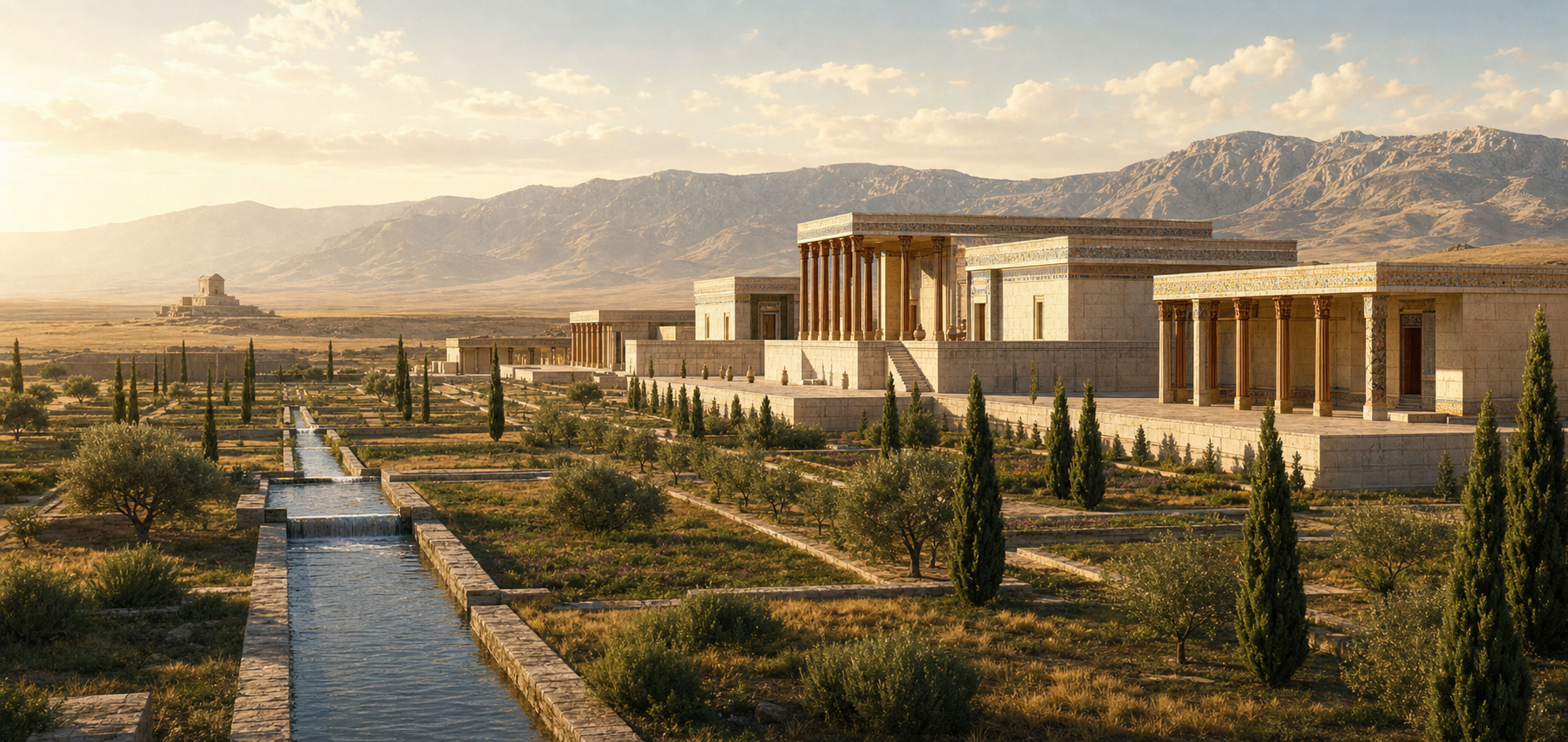
The Achaemenids unite Iranian peoples and rapidly conquer Lydia, Babylon and territories across western Asia.
Thermopylae, Salamis and Plataea become defining episodes in the conflict between Persia and the Greek alliance.
Athens and Sparta lead rival coalitions into a destructive struggle for dominance in the Greek world.
Alexander’s generals divide his conquests, creating powerful successor kingdoms.
Rome and Carthage enter a century of wars for control of the western Mediterranean.
Octavian defeats the forces of Antony and Cleopatra, ending the last major Hellenistic kingdom.
Rome’s republican institutions continue in form while imperial authority is concentrated in one ruler.
The agreement associated with Milan ends official persecution and transforms the religious future of the empire.
Romulus Augustulus is removed from power, a conventional marker for the end of the western Roman Empire.